Mythinks #12
Pokemon Pokopia - Pokemon on Inheriting a Broken World
The core appeal of Pokemon is, perhaps a little redundant to state out loud, the Pokemon themselves. With such an immense variety in aesthetics and design that I feel like you'd be hard pressed to find someone that genuinely doesn't like a single one of them. In part because there's over a thousand of the damn things by now, but. Details. There's a reason why, despite everything, merchandise is the brand's number-1 money-maker. But given Pokemon's strongest identifying feature isn't tied down to being any one video game that the series would be ripe for turning into a lot of spinoffs, not having to stick to just traditional RPGs. Expressing that very same flexibility the design sensibilities of the monsters display by slotting the setting into most genres you could think of.
Which is why it's nothing short of a little disappointing that Pokemon's ventures into spinoffs have been a little sparse for particularly notable showings. It's not like there's nothing of worth in there, but when it comes to spinoffs that feel like full, feature-complete experiences, that they're sadly few and far between. Be it on me to be the judge of whether or not Pokemon Channel or Dash "counts" as much as any one game in the Mystery Dungeon series by some arbitrary metric, but I do know which one has had a more lasting impact, both on myself and just the culture of Pokemon's fandom in general.
It's especially dejecting in the post-smart phone era, when the more corporate end of the brand has been quite giddy in realizing cheap-to-make mobile games with microtransactions are the way to go. Just disappointing to see that aspect of the franchise fall so short of its potential. In that respect, it's definitely a landscape where a surprise, out of left-field title like Pokemon Pokopia is a sight for sore eyes.
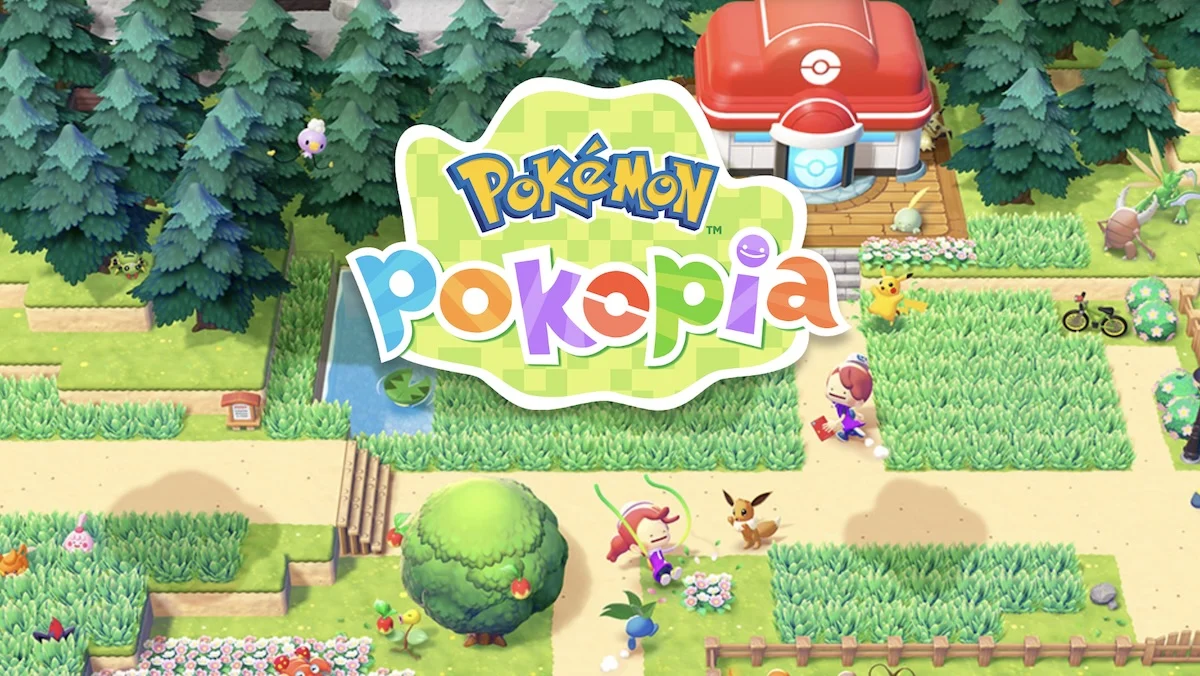
Pokopia in general feels like one of those dream Pokemon games I would have imagined as a child, in fact feeling like it was cooked up in the inner machinations of a lot of Poke-Millennials imagining what a Pokemon-Animal Crossing crossover might look like. In that respect, already kind of showing that this is a game likely made by a lot of people that grew up with Pokemon as a core part of their childhood.
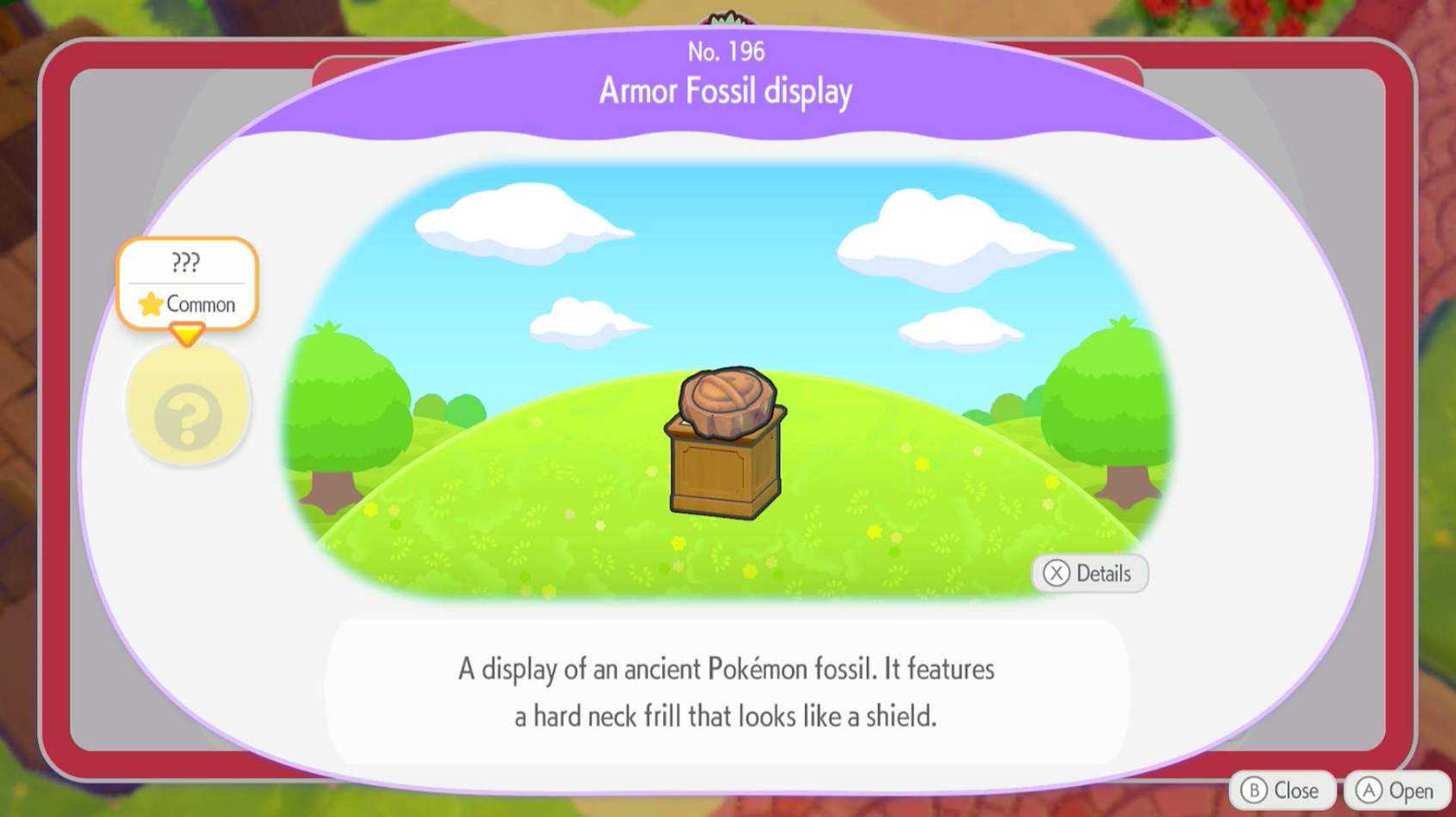
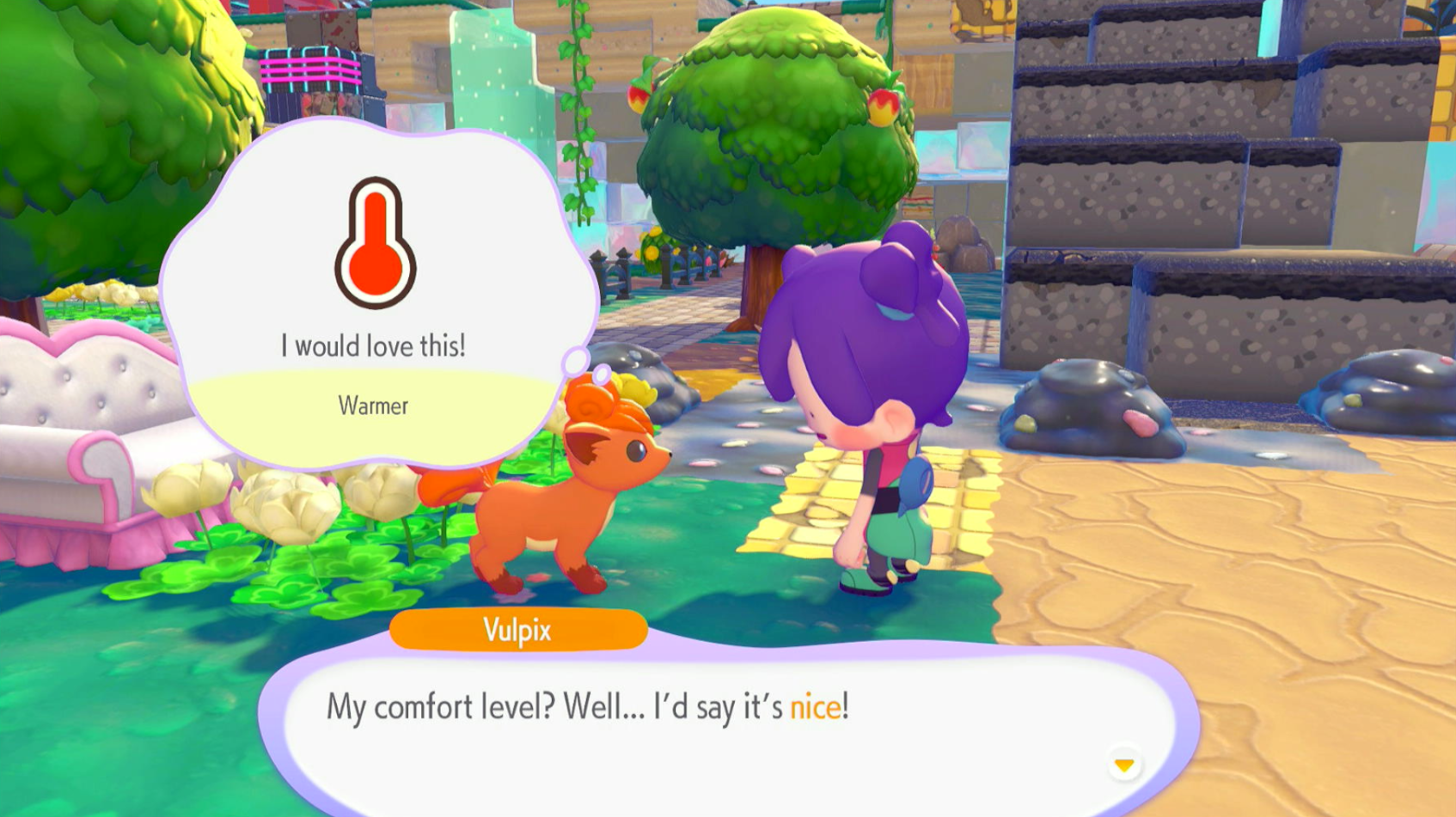
The game also gives a very good example of what can be done to maintain the spirit of Pokemon while having gameplay that is notably different. That aspect of catching and collecting translated well here through the act of making different habitats that will make an individual Pokemon appear. Some easy enough to intuit, like placing grass and flowerbeds next to different overworld objects, but others with a bit more complexity and requiring a more specific setup. Some could be simple enough to just stumble across as you're customizing the world around you, but others were so specific that they felt the need to put in a hint system that lets you know the specific ingredients needed to attract a particular Pokemon.
 JINX:
JINX:
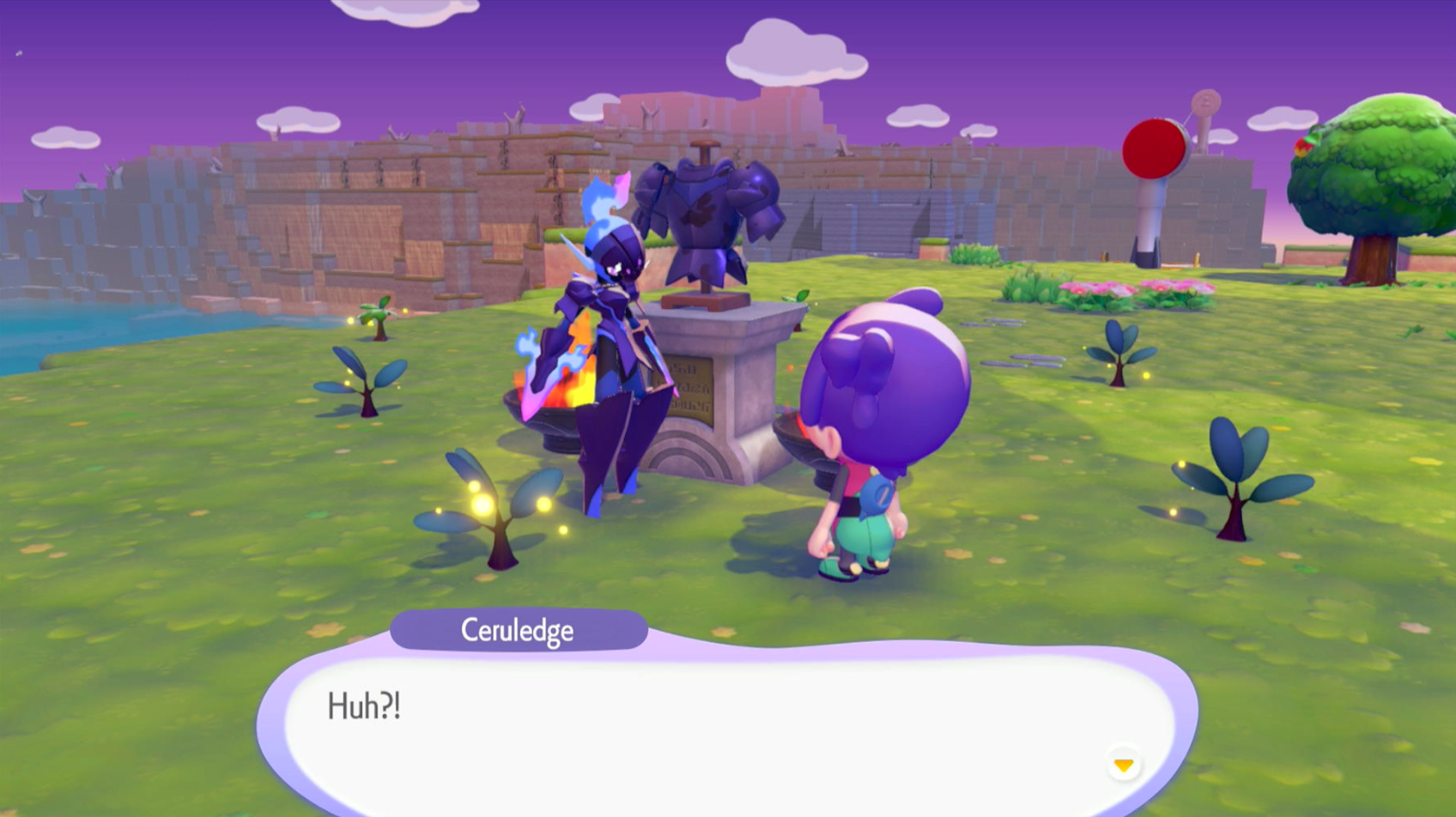
on one hand, i do feel like this sacrifices a bit of the discovery attitude of the game, it stepping away from the part that i think shines the best in its gameplay, where it encourages you mess around and fully customize your experience. so a feature like this feels almost a little too controlled, like the hand of god coming down to beam divine knowledge into your brain to be absolutely sure you know how to bring a ceruledge into town.
i think it'd be one thing if they only did this for pokemon you definitely needed to make story progress, or ones that unlocked your different abilities, while the rest you could be left to find out on your own, clinking items together until the game gives you the "good job" confetti. especially since in a world where serebii or bulbapedia exists, that information would eventually find its way to be on-demand anyways.
-------------------------------------------------------
 CELESTE:
But I do think that, realistically, there's so many combinations and configurations of items you can put together in one place that it would be a shock to find any purely on your own. MAYBE having a more generalized and looser version of the system would be fairer for Jinx's idea, but I like what's there right now. It's cool to see what you need to summon one of your favorite Pokemon is an object you haven't seen yet, so you meticulously keep your eye out for it and excitedly take it once you have the means to get ahold of it and make that habitat.
-------------------------------------------------------
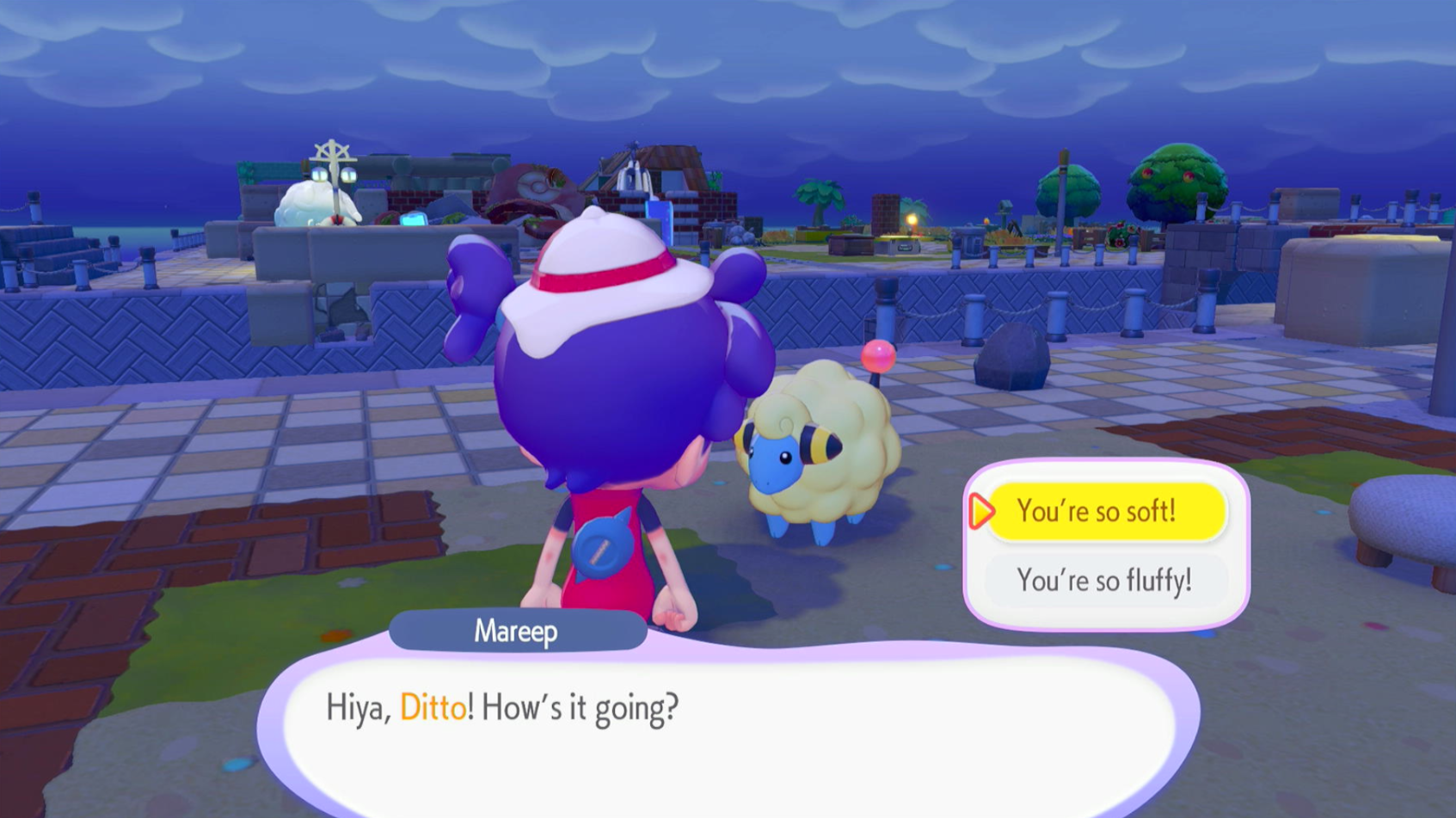
In either case, I do feel like a decently quintessential feature of a Pokemon game is to keep ahold of the collect-them-all aspect, and indeed, the series' best spinoffs, in the form of Pokemon Snap and the Mystery Dungeon series, both include this in some fashion. The collection aspect also lives in a new light in this game, and does offer that nice chance of discovery, mirroring that feeling in the main series games of finding a new area, excitedly rummaging through the grass to see what new Pokemon might be available to you. The feeling only increasing tenfold, the way each new area opens up a ton of Pokemon to be available to you. In that it's at least nice to peek into which Pokemon are available before getting a chance to see any spoilers for what's available online.
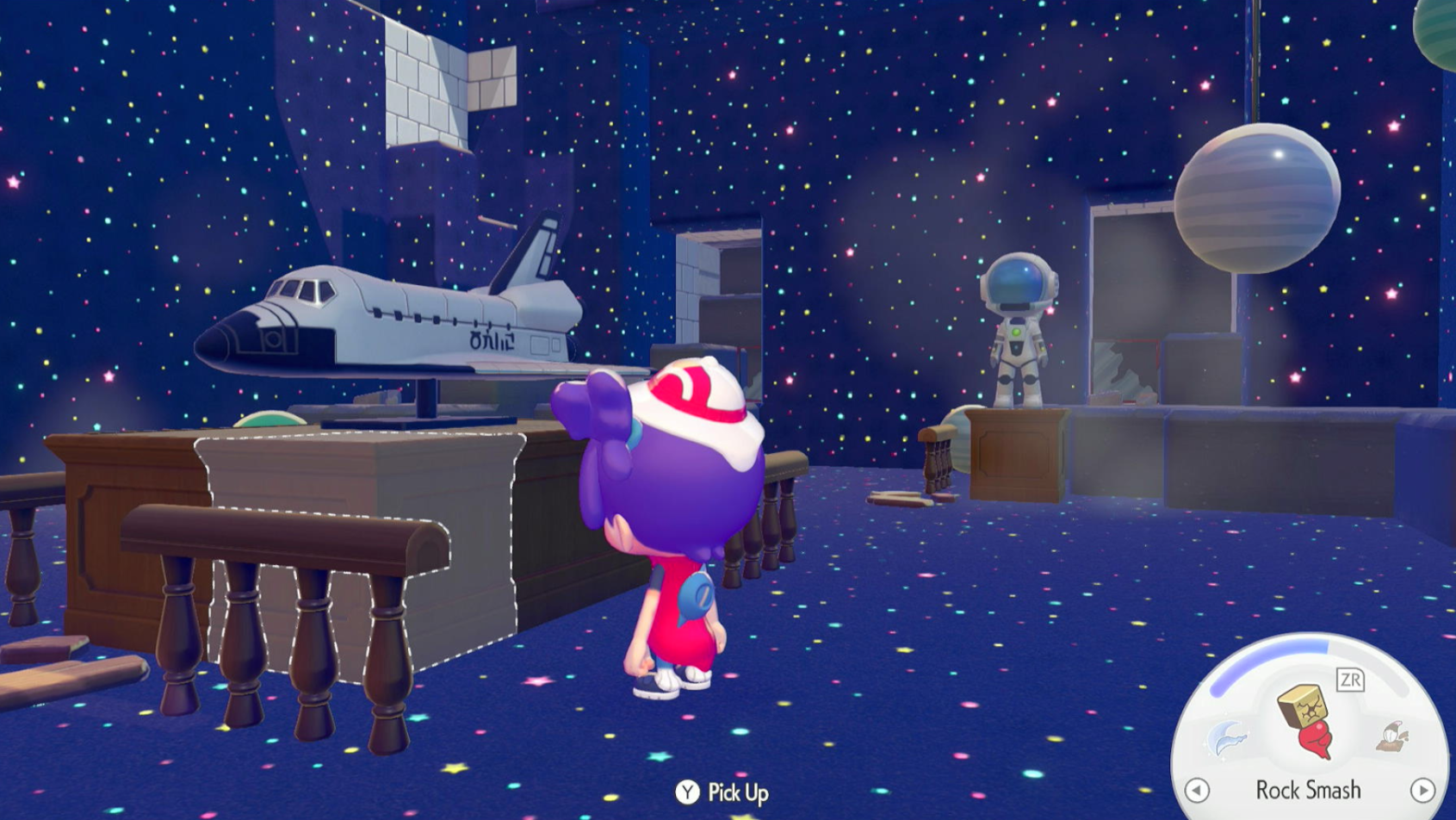
Unlike the game's presentation inviting comparisons to Minecraft, the overall structure of the game is built around these pre-constructed open zones that you unlock over time, rather than being procedurally generated. It definitely works in giving the game world a more hand-crafted feel than a Minecraft or Terraria ever feels, with a lot of hidden nooks and crannies that beg poking around the environment, finding every little hidden treasure or log that discusses the mystery of how the world wound up so desolate and empty. I'd be many hours into exploring a new area only to find there was yet another hidden zone behind a massive mountain or within a room I hadn't discovered yet.
The five main areas of the game also serve as a way to introduce you to different mechanics, in a way that comes a little more organically than they do in some of those aforementioned block-building type games. Even if it does sacrifice the hands-off method of teaching within those games. Something that does stand out a bit when Bleak Beach tries to give me a tutorial on how power grids work several hours after I already found out on my own. But it is nothing short of impressive, how I would be well into about 100 hours into playing the game only to find out it still has new mechanics or major utility items to show for itself.
 CHIAKI:
Which I'd like to say, is nothing short of an impressive feat given a game of this style and scale. It's very often that I feel that life sims, or indeed, Minecraft, really show their hand at the very beginning, and as versatile as they can still be, the exposure to new mechanics slows down to a trickle. Especially for something like Animal Crossing, which the only time those games have ever really had a "blow-the-world-wide-open" moment is when you unlock terraforming in New Horizons. Pokopia has like, three different "blow-the-world-wide-open" moments.
-------------------------------------------------------
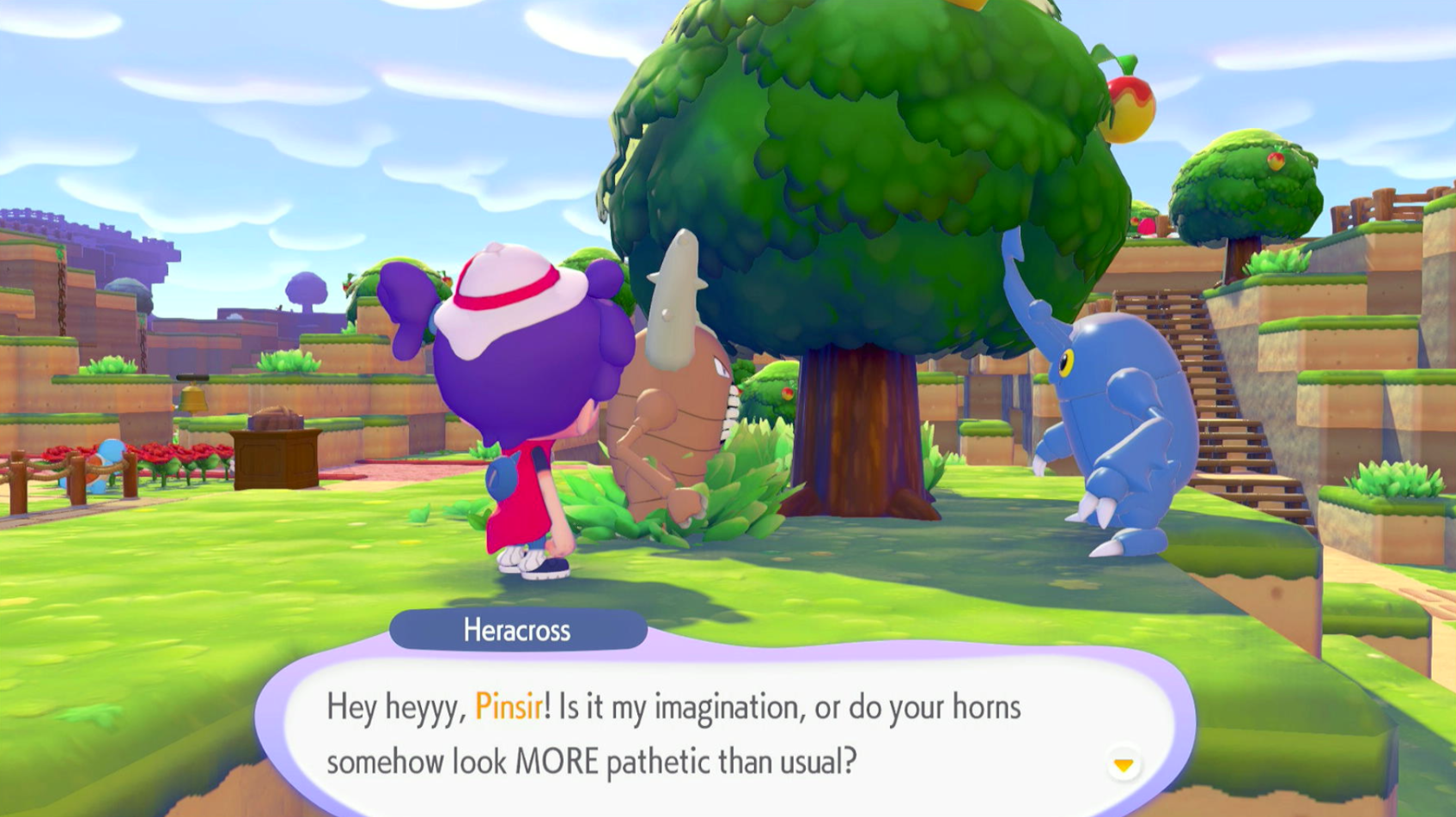
A game of this style isn't really carried by mechanical complexity, moreso by how intricate and detailed the game world is. Many odd little touches are what helps a game like this feel all the more like a living, breathing world. Which is something that can manifest in a lot of ways, from things as minor as being able to fill a bath with your Water Gun and then soak in it, all the way up to the effort it must have taken to write unique dialogue for every single Pokemon.
Plenty of dialogue is repeated, pretty obviously. A Pokemon tends to fall in one of a handful of personality types a bit like Animal Crossing villagers, but all of their intro dialogue is very specifically written on a per-species basis, showing a lot of care going into incorporating every Pokemon's personality and appeal. A few Pokemon even get tasks specifically tailored to them, to have more opportunity for unique dialogue. An early example being the way Scyther asks for flowers, bemoaning that it cannot pick them itself on account of the whole scythes-for-arms thing.
I could only really wish that the Pokemon had more unique conversations between each other, that you can listen in on. But, look at me, already being fed and barking for more.
 LUNA:
LUNA:
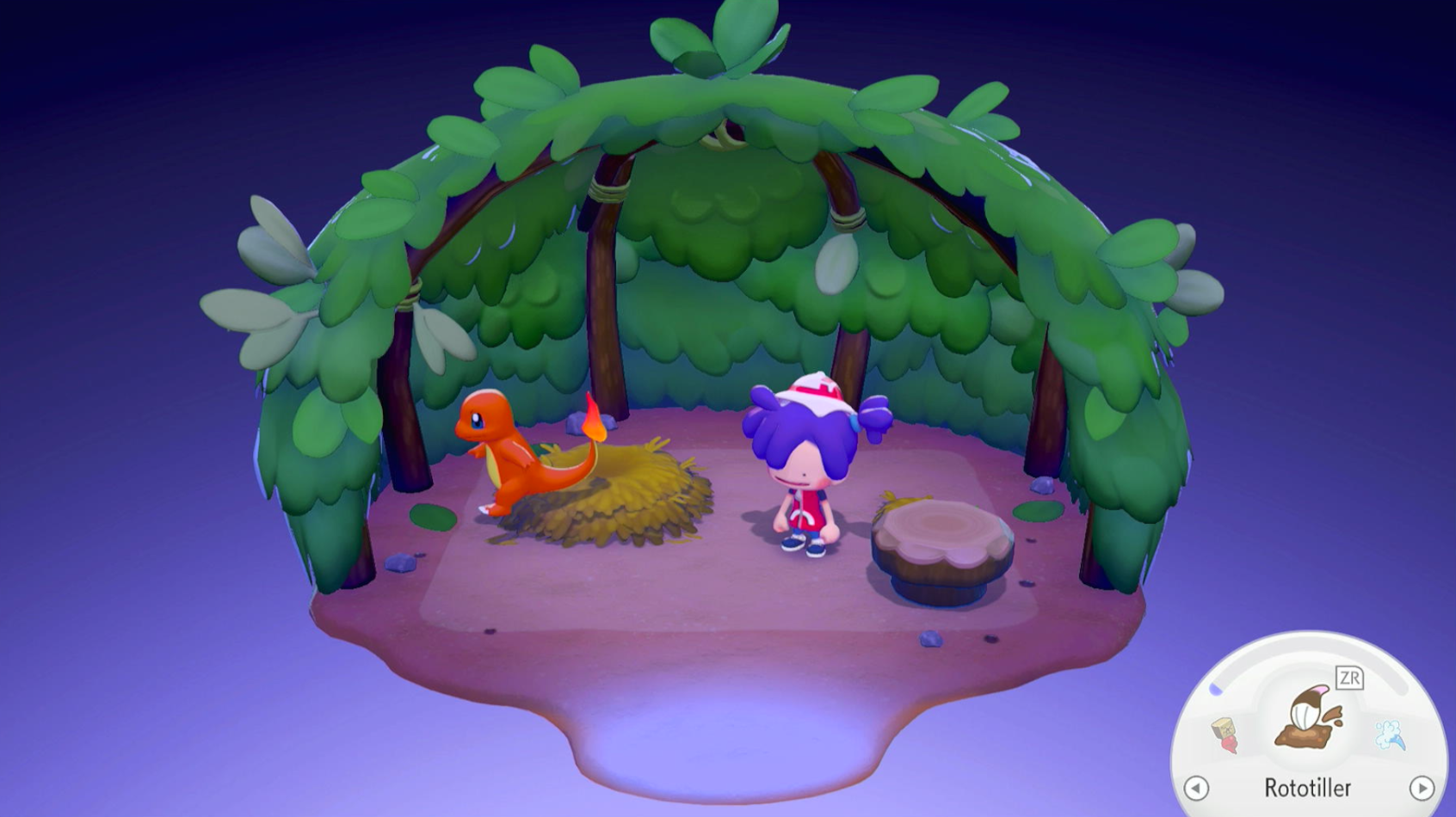
This game LOVES including smaller touches that breath a lot of life into itself. The way Pokemon react to changes you put into the environment, expressing happiness when you make a change they like, or being discomforted when you place an object they don't want near their home too close by. As well as a lot of thought going into what kind of environments which Pokemon prefer.
A lot of it is "Well of course" after the fact, but stuff like the Rowlet line preferring darker places, so you'll have to find a nice, shaded area for them. Some Pokemon actually prefer when their surroundings are drier, with the deader grass around their home. Though this does cause a complication I've had more than once, where a Pokemon's designated home is underneath a tree, but using a Smooth Rock to dry the area out causes the tree to die, which erases their home and technically turns them "homeless."
-------------------------------------------------------
 VIXI:
VIXI:
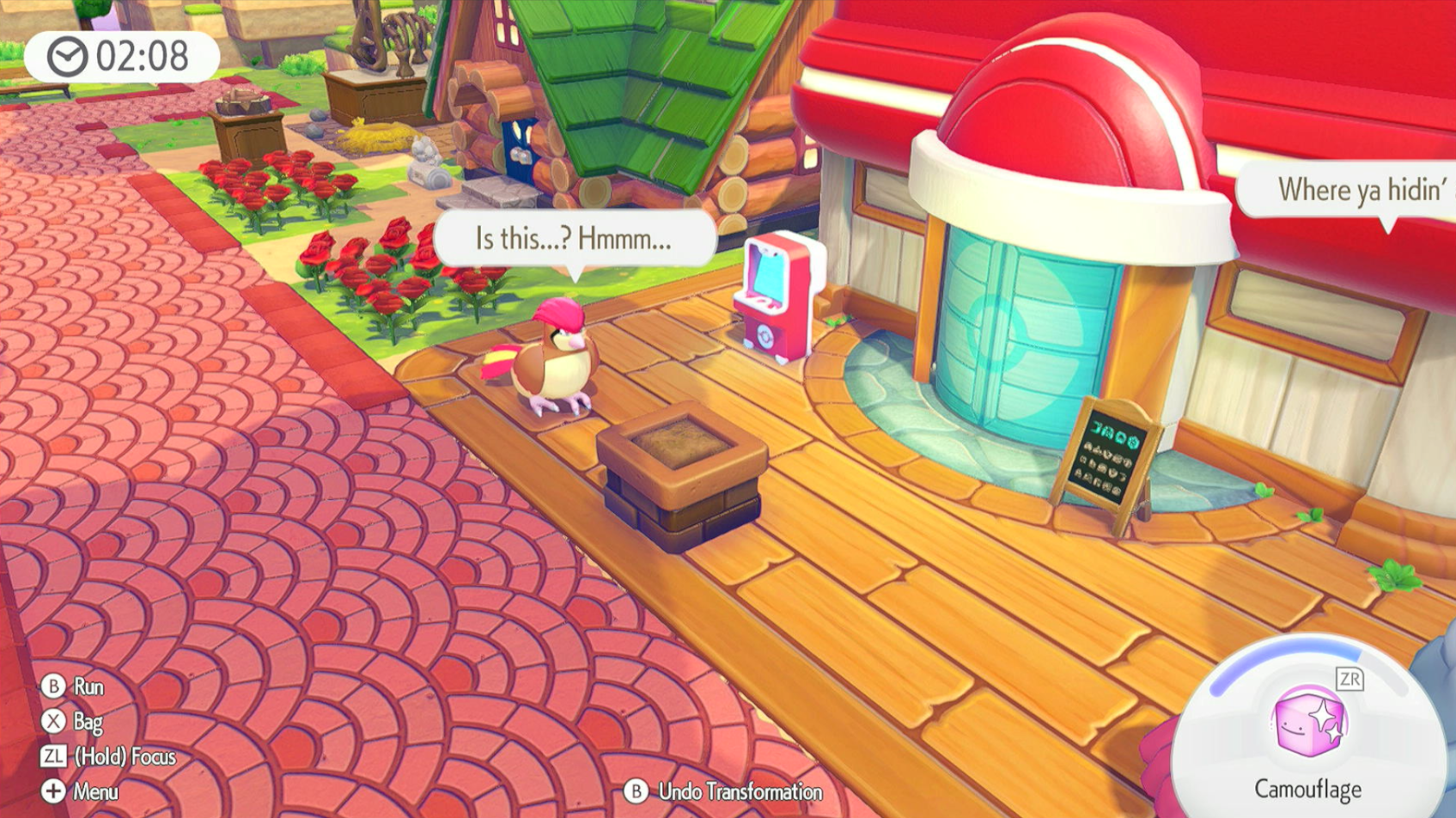
The Pokemon in general kind of have a chronic lack of object permanence. They ARE animals I guess, but god forbid if you want to move an object they've decided belongs to them within their line of sight. As in you weren't even gonna take it, you were just moving it someplace more convenient. But they still take that extremely personally.
But that sort of thing does feel like a small price to pay for how gratifying it is to make Pokemon more happy and raise the environment level, bit by bit. One advantage this game definitely has over Animal Crossing is that each area starts at its lowest-looking point, and can only ever really trend upwards as you make each area more homely over time. On top of the benefit of the game not punishing you for taking time off away from it, again, unlike Animal Crossing, which can have some towns just go to shit even if you just spend a couple weeks away from the game. Which works for that kind of game, I definitely think Animal Crossing is more interesting as a game in the ways that it's willing to be inconvenient in the same ways real life is often inconvenient. But I'd personally rather my game time not feel like I'm doing chores.
-------------------------------------------------------
 IONO:
IONO:
The game really hits the right amount of direction and indirection. Not that a game needs to keep egging me with objectives, but I do find myself really zoning out when playing something like a Terraria or a Minecraft, where I just get paralyzed by the endless, terrifying freedom. A big objective with the freedom to goof off if you'd like definitely feels right for these "world is your oyster" creative-type games.
You can just raze each area to the ground and replace everything with your own personal creations. You can try to rebuild the ruined town but with your own personal touches to it. There's always something to do! Which feels better than had this game just been another procedurally generated world type game.
-------------------------------------------------------
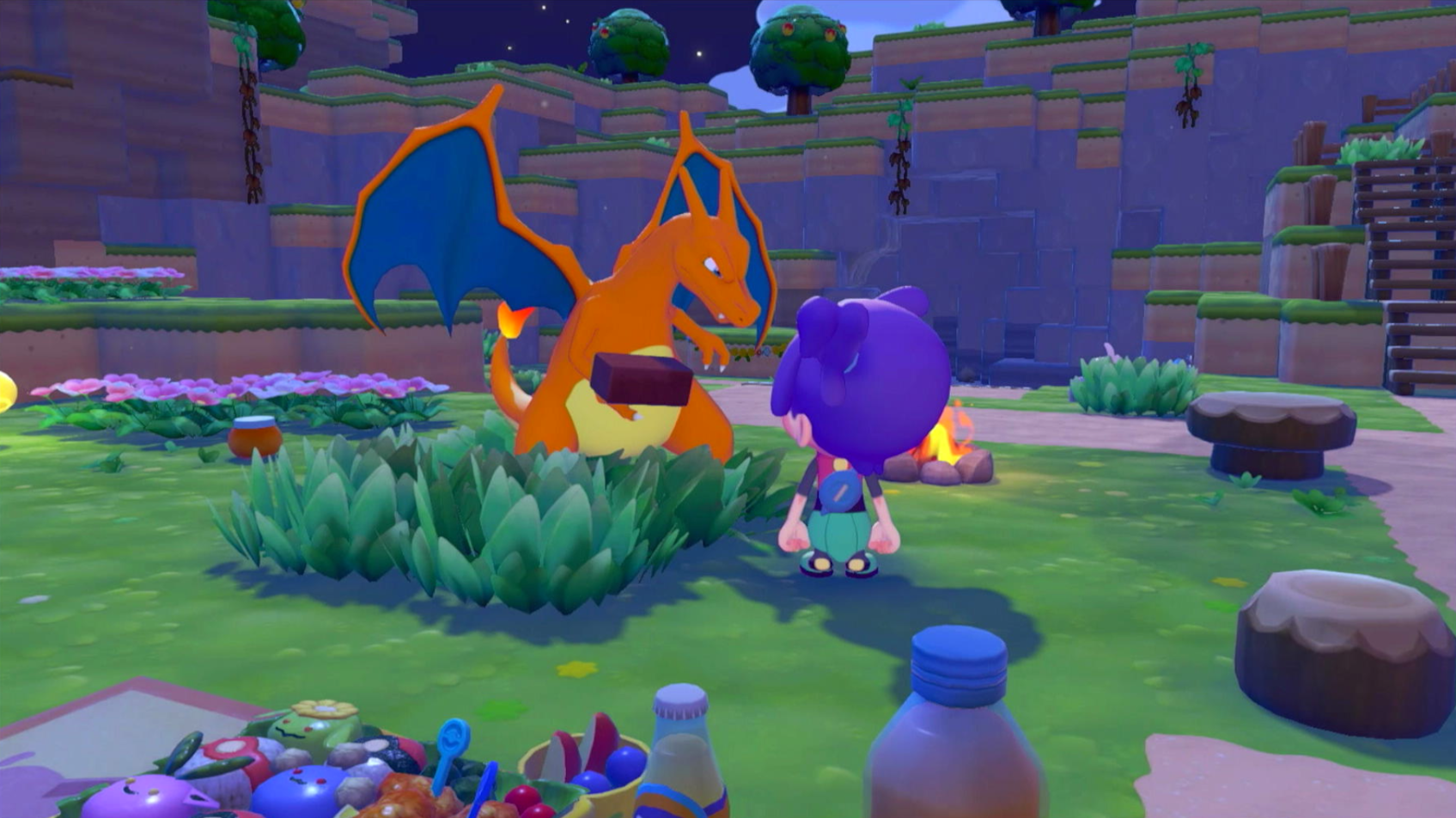
One mild point of friction is the game's controls getting the better of it at times. For the most part, everything is smooth, seamless, and fairly easy to understand. Especially as you unlock more and more of your basic abilities. Some of it can feel a little imprecise, especially since you have to "aim" what block you want to interact with, whether it's punching it, placing it, or watering it with your Water Gun move, but that is at least somewhat made up for by holding the left trigger, which sort of locks Ditto to moving on a grid. You do have to go in and out of this mode a lot, since they won't let you move between surfaces while in it, but it's so easy and becomes second nature that it's barely worth a mention.
It's mainly the imprecise nature of the "aiming" that can make it so you place something in a spot you didn't mean to, and then break something else and trying to pick it back up again. It can be somewhat comedic to try and position Ditto just right to be able to pick up the item you have your eyes on, only for Ditto to pick up everything but what you're directly looking at. It's these sort of thing that aren't the end of the world for a game like this, it almost kind of being funny more than anything, just in part thanks to so much of the rest of the game respecting your time.
Pokopia, like a few other life sims, runs off of the system's clock, meaning it times some events according to real time. It will outright tell you you'll have to wait until tomorrow for something to be finished at some points, especially building larger buildings. Which I think is fine, for the record. It is a game where you are expected to find your own ways to have fun with it, and are much less held down by whatever limited amount of tasks are available to you within a day.
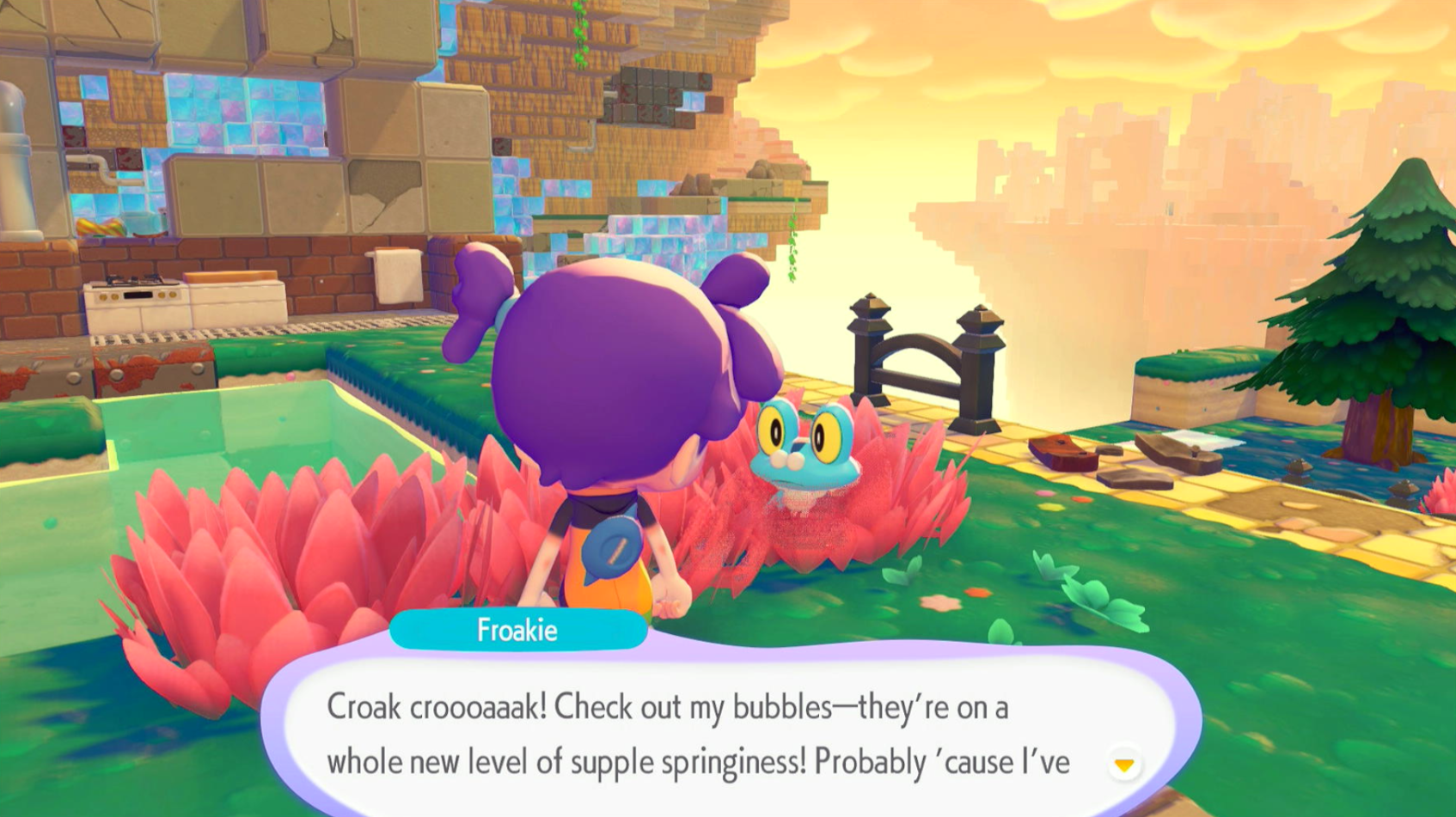
Areas start out with a set of different Pokemon, usually frontloading you with some friends before sort of calming down with introducing new ones over time. I haven't seemed to have hit a hard cap in any one area, but given I haven't even hit the halfway point in terms of how many Pokemon are in the game in total, and to my knowledge, it is possible to move Pokemon to another town completely, perhaps there's no true caps. I do get the sense that it only keeps a certain amount of Pokemon spawned and active at one time, given how sometimes I'd simply not be able to find the Pokemon I'm looking for at times.
But as per usual with this game, there are work-arounds that respect your time. Some items that exist solely for convenience's sake, like the jars of honey that can be used next to a Pokemon's home to cause them to spawn nearby whenever you need them. Or just the simple fact that you can summon Drifloon to take you to one of the disposable resource-haven Dream Islands simply by examining its corresponding plush doll.
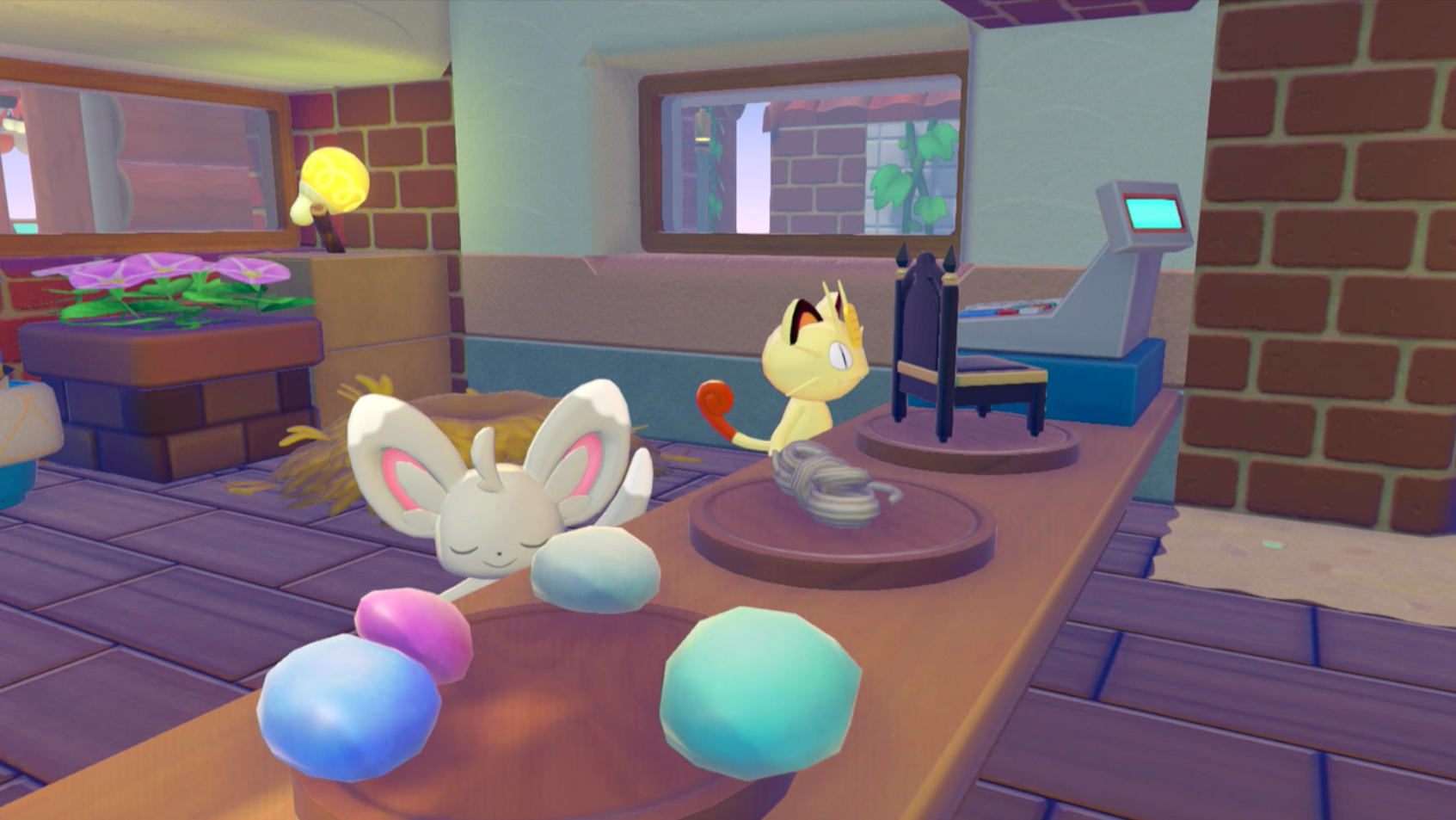
Most Pokemon have some trait to them that makes them unique, especially among each town's roster. And for convenience's sake, you'll need a Pokemon with each ability. Fire-breathing to be able to help with lighting campfires or a furnace, to Pokemon that simply exist to offer a building benefit. Some buildings will require a builder, a bulldozer, and in some cases, even a flying Pokemon, but a lot of the must-haves for each area are some of the Pokemon you'll first be meeting in said area, so it was rare that I had to really hunt for one, especially to make story progress.
Some Pokemon even have entire gameplay mechanics tied to them specifically, again, like how Drifloon can take you to Dream Islands, these procedurally generated areas that are primarily there to offer a place to get non-renewable resources without having to basically strip-mine the different towns. Sometimes, if you're lucky, you can even get ahold of resources the game doesn't even expect you to have access to yet, this way, and the game doesn't arbitrarily block your access to them.
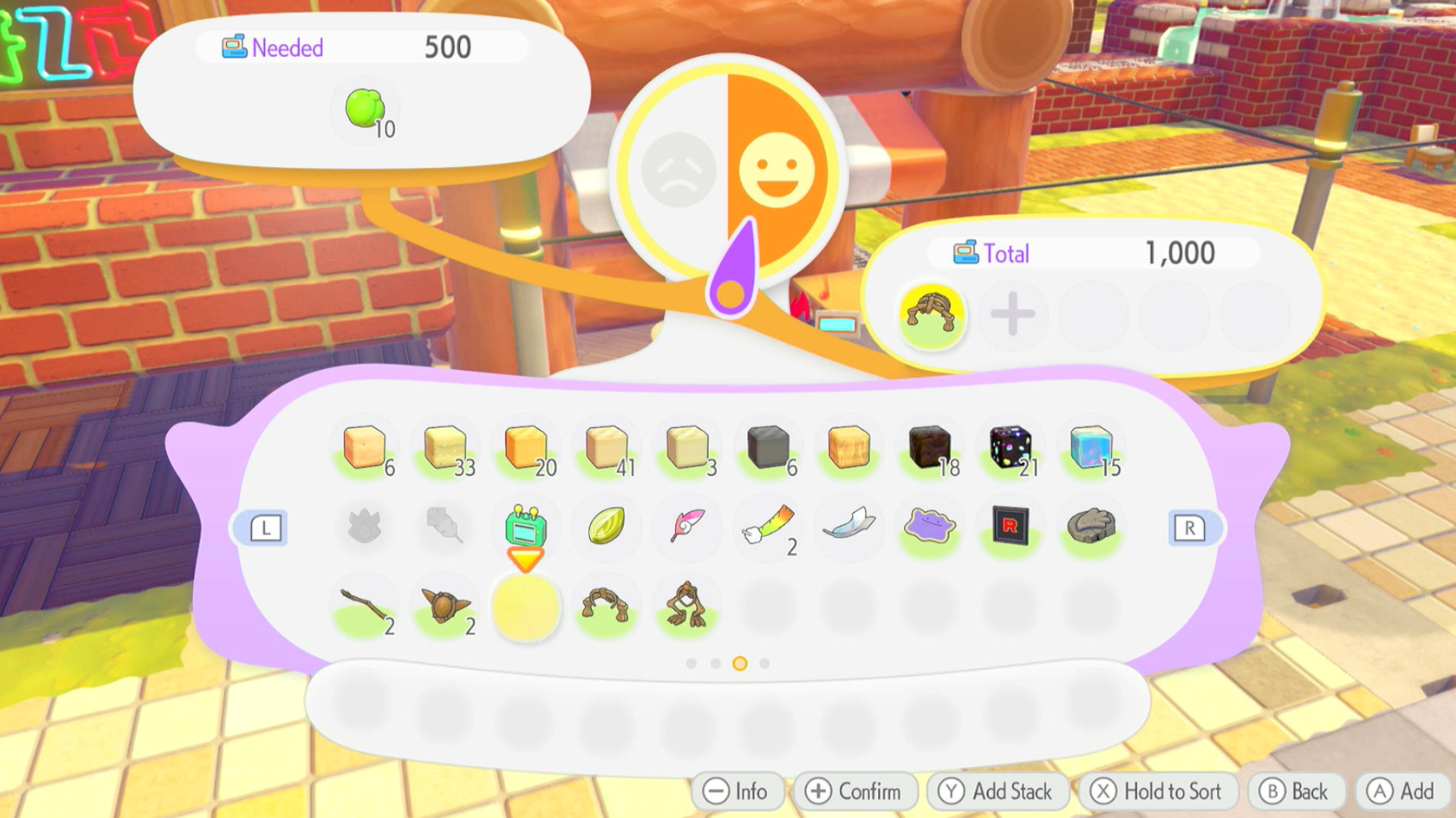
One particular stand-out feature to me is the inclusion of a trading-bartering system, where instead of the Pokemon exchanging currency, you see the value of an item in a shop run by a Pokemon, and then have to offer any number of your own items that are of equal or greater value. Though I have found this system is decently cheese-able in ways. Not that that's necessarily a bad thing, but it didn't take long to gravitate towards simply using the honey jars, a very easy to come across renewable resource with a decent amount of trading value, along with the feathers dropped by the legendary duo from Gold and Silver, which pretty handily match or exceed the value of any item you can find in the shops.
Instead, the actual "money" in the game takes the form of what are essentially app reward points, which you mostly use for buying some items, most of which have a limited stock, so once you buy them, that's it. Instead the system feels most at hand with collecting and buying crafting recipes and habitat hints.
JINX:
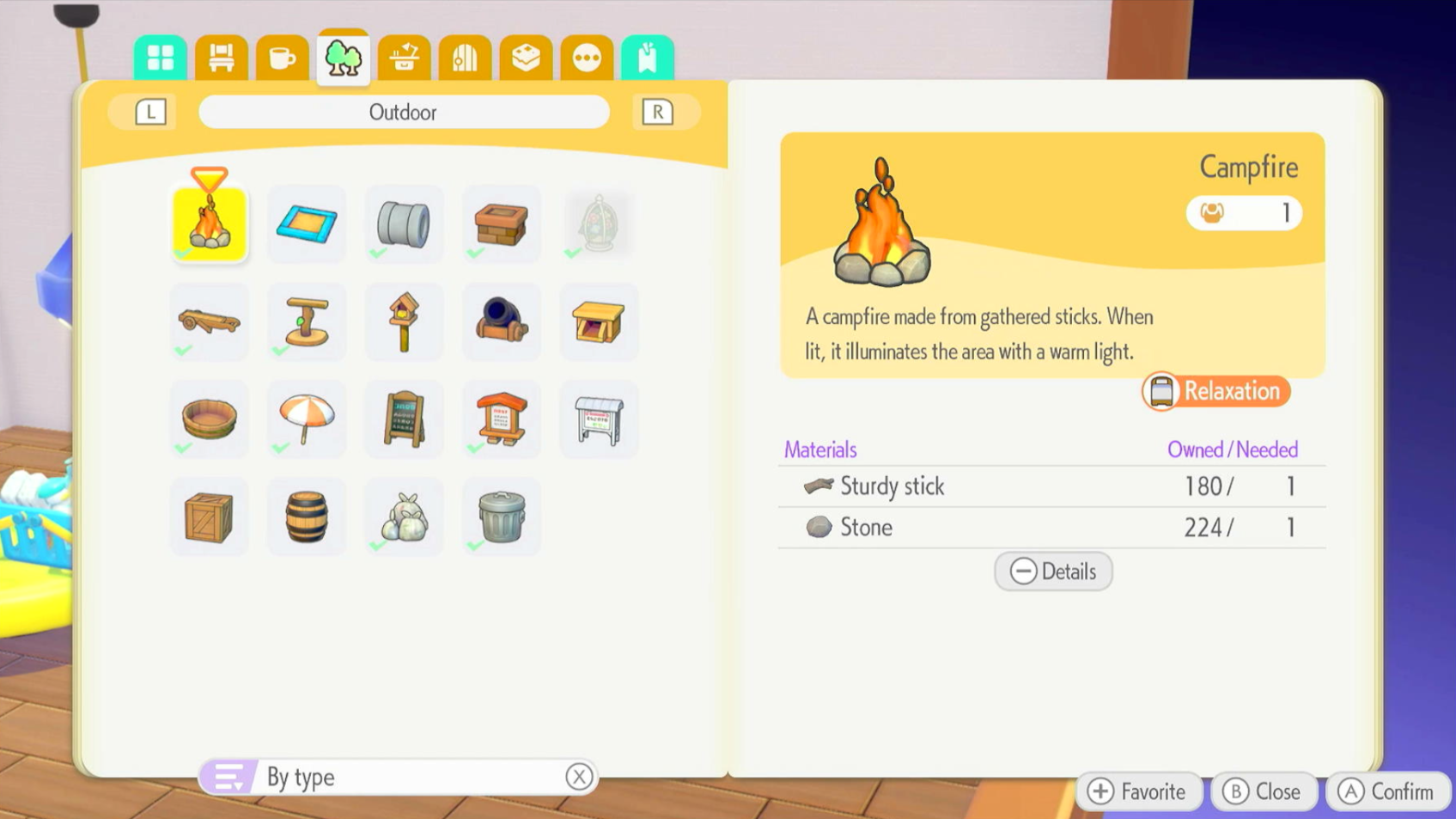
normally the inclusion of a crafting system makes me roll my eyes a bit, given those are a dime a dozen these days. and while pokopia doesn't exactly refine the idea or do something all that unique with it, i am glad it seemingly took a lot of criticisms of other crafting systems to mind and has quality-of-lifed the hell out of it. a crafting table using up resources you have in your four nearest storage chests. which, it's pretty easy to have almost every common crafting resource in just one large storage cabinet. on top of that, allowing you to make multiples of any item you want streamlines the process by a lot, which renders its inclusion here at the very least "inoffensive". necessary for the territory, but at least inoffensive.
-------------------------------------------------------
Something that DOES, however, breathe a lot of life into the game on top of everything else, is the way it handles its own setting, giving it a very unique place in the whole Pokemon mythos. In a life sim game selling itself in the same breath as Stardew Valley or Animal Crossing-style "cozy" games, you would think the setting would be purely a wholesome endeavor, and in large part it does present that way, given this is a world where none of the Pokemon fight each other, for survival or fun or otherwise. And a game where everything is peach-sweet and nice to you is a style of game very much primed to have its world not be very challenging or feature much in the way of thematic depth.
It would have been easy enough to just have a simple life sim game starring Pokemon, and have it all take place in a place that just conveniently happens out of human sight, let alone if humans are ever mentioned to begin with. But as the game unfolds, it starts to show more and more of its layers, both spelled outright and kept quiet for those that would like to notice on their own.
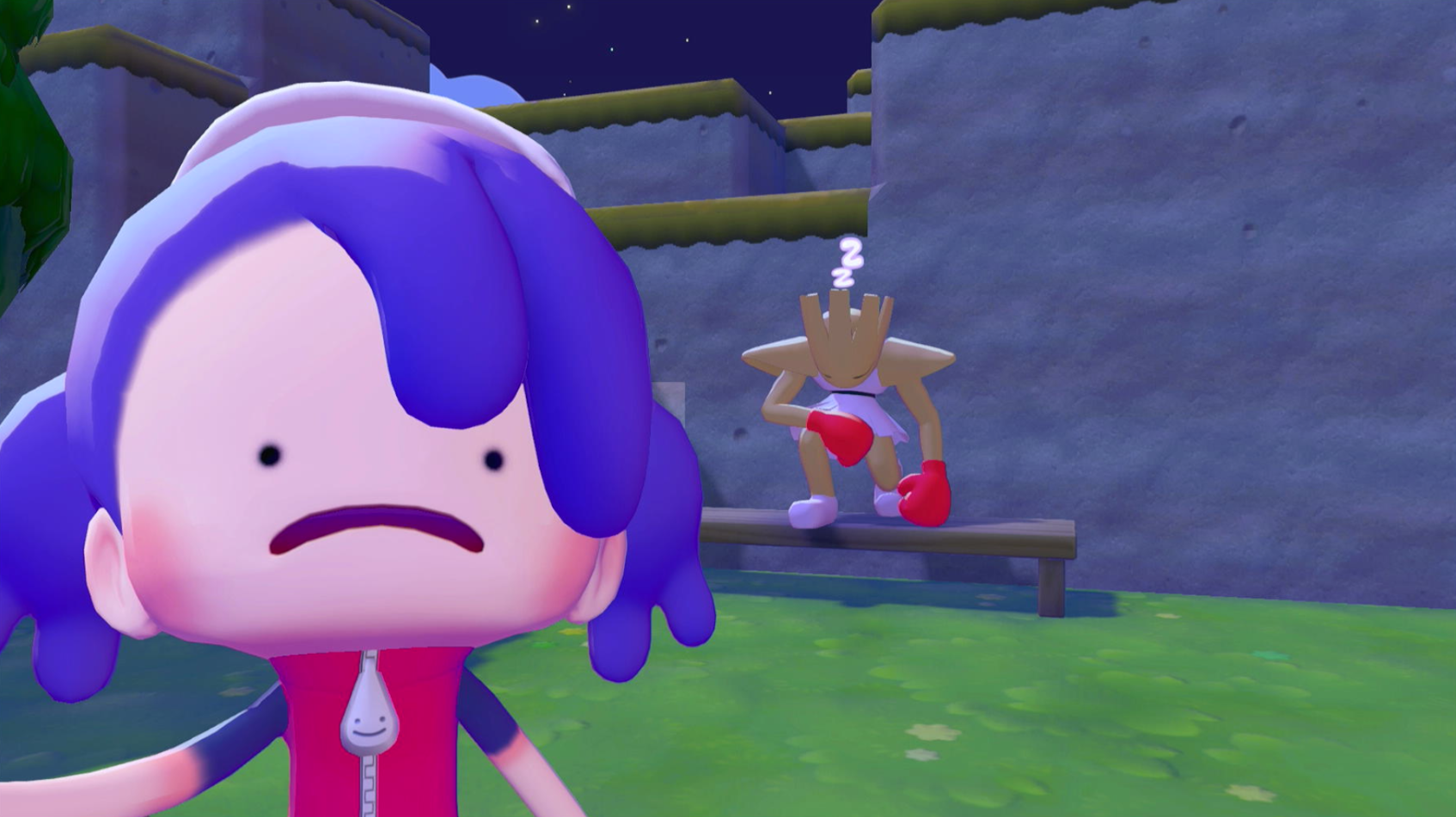
In large part starting with the choice of protagonist in making it be a Ditto. Again, it'd be very easy to just make this game star Pikachu and maybe a few of the starters going on cozy town-building adventures, but Ditto is far and above the much more inspired choice. And in general, if Pokemon spinoffs where to start leaning more towards Pokopia in terms of scope and direction, it'd be nice to see Pokemon other than the big front-runners of the brand get the spotlight every once in a while.
Because of this, it's hard to imagine a Pokopia that didn't have a Ditto as the main character, just given how much of a perfect fit it is. With your main task being to restore the ecosystem and make the world look lively again, able to mold the world to your liking in whatever shape you'd enjoy, a bit in the same way Ditto itself is able to shape-shift. And of course, it's adorable to see the ways this game does That Nintendo Thing where any gameplay features get contextualized into things that exist in the game world itself. Of course Ditto is able to just keep obscene amounts of objects, whether they be landscape, furniture, or entire appliances, all in and inventory. It's because Ditto is a bit of a freak that can just hammerspace everything into its stomach.
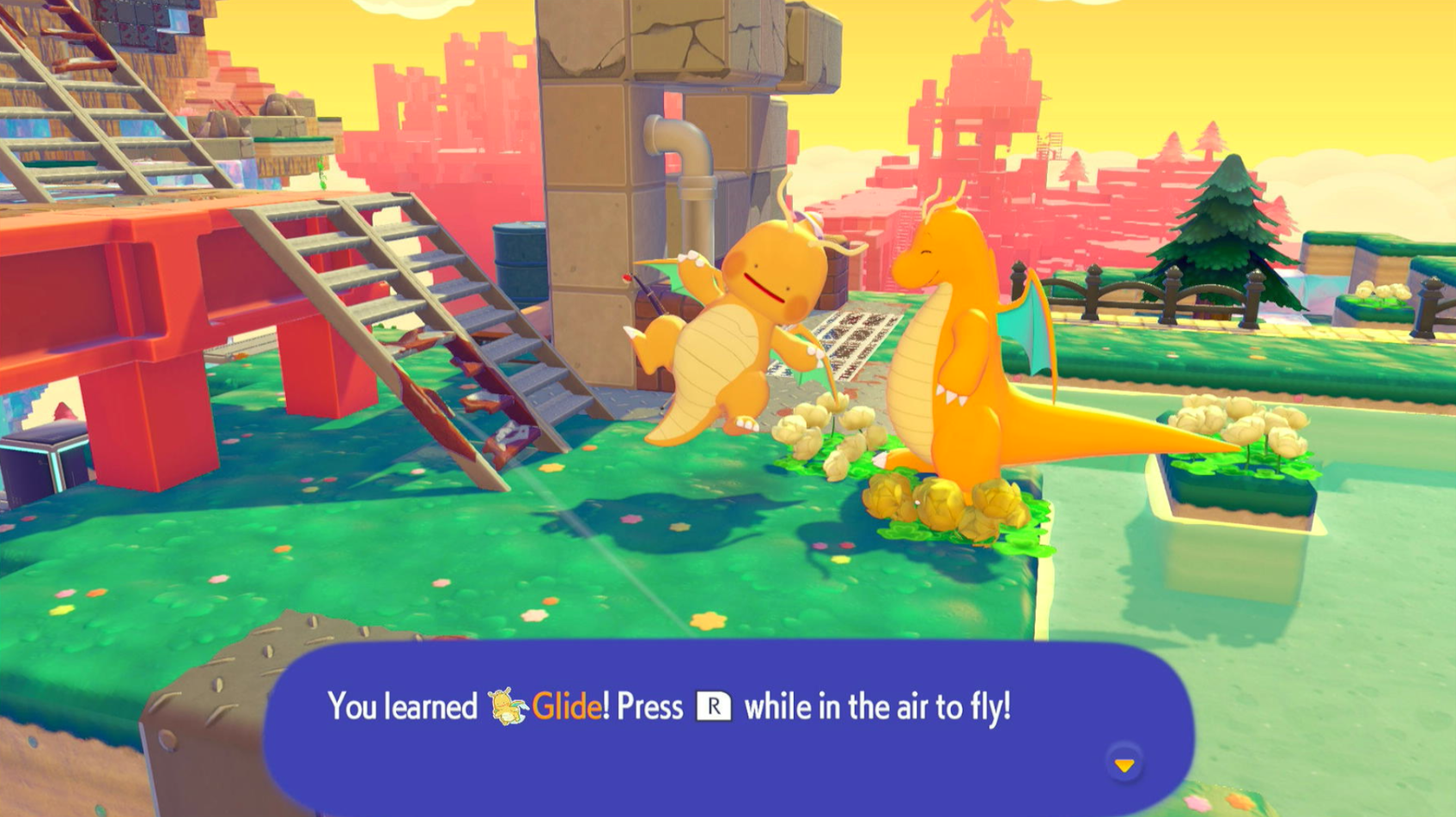
Likewise, the way they turn the common actions of the game into moves you can use by transforming into various Pokemon is very inspired, a lovely touch that makes them feel like a natural extension than, again, had this just been Pikachu with a watering can or something. It also rather simply makes these skills a little easier to access when they're just features of your shape-shifting body. This not being a game where your inventory space is effectively fractioned simply because you got eight or so must-have tools to keep on you at all times. It's also pretty cute that your "stamina" guage is also your PP, which you use up by using moves. Though restoring it is so easy, I almost can't help but feel it's a bit of an afterthought.
It makes the choice of protagonist Pokemon feel that much more like a measured consideration, if not just outright a game designed from the ground-up to star Ditto in the first place, maybe even going so far as to say this game is like a glimpse into what a Pokemon game would look more like had it been a game starring a shape-shifting blob creature faking the shape of a human all along.
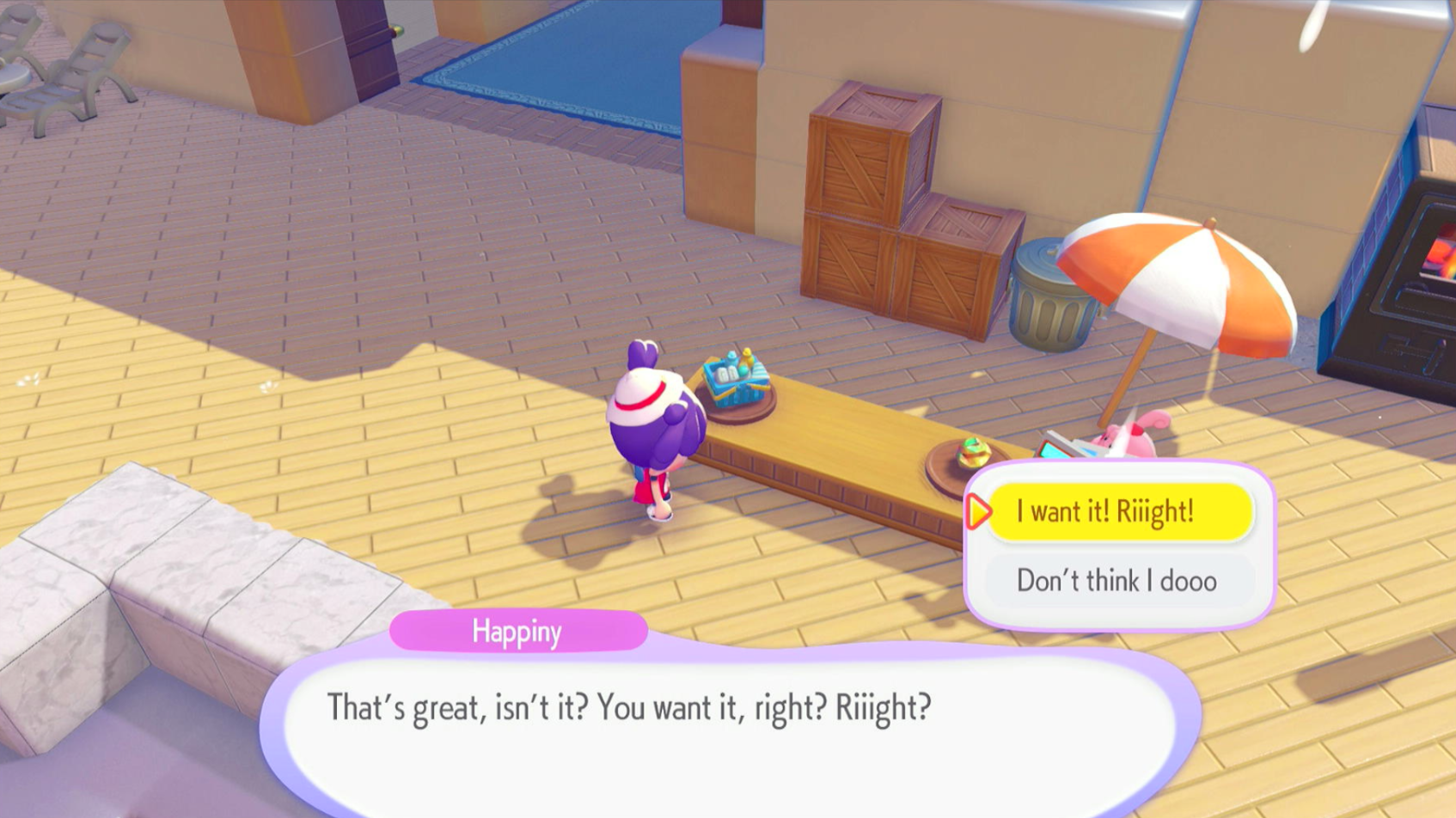
And of course, this game at it again with the small, cute details, we do get the occasional small glimpse of how Ditto is as a character. Naturally, they take the role of a partially silent protagonist, but they do seem very impressionable. Fair to say maybe that's what all Ditto are like, but it is fun to see it take on the shape of a child and, in and of itself act a little childish. Namely in meeting an old dude and immediately going for begging to take one of their belongings.
 VIXI:
VIXI:
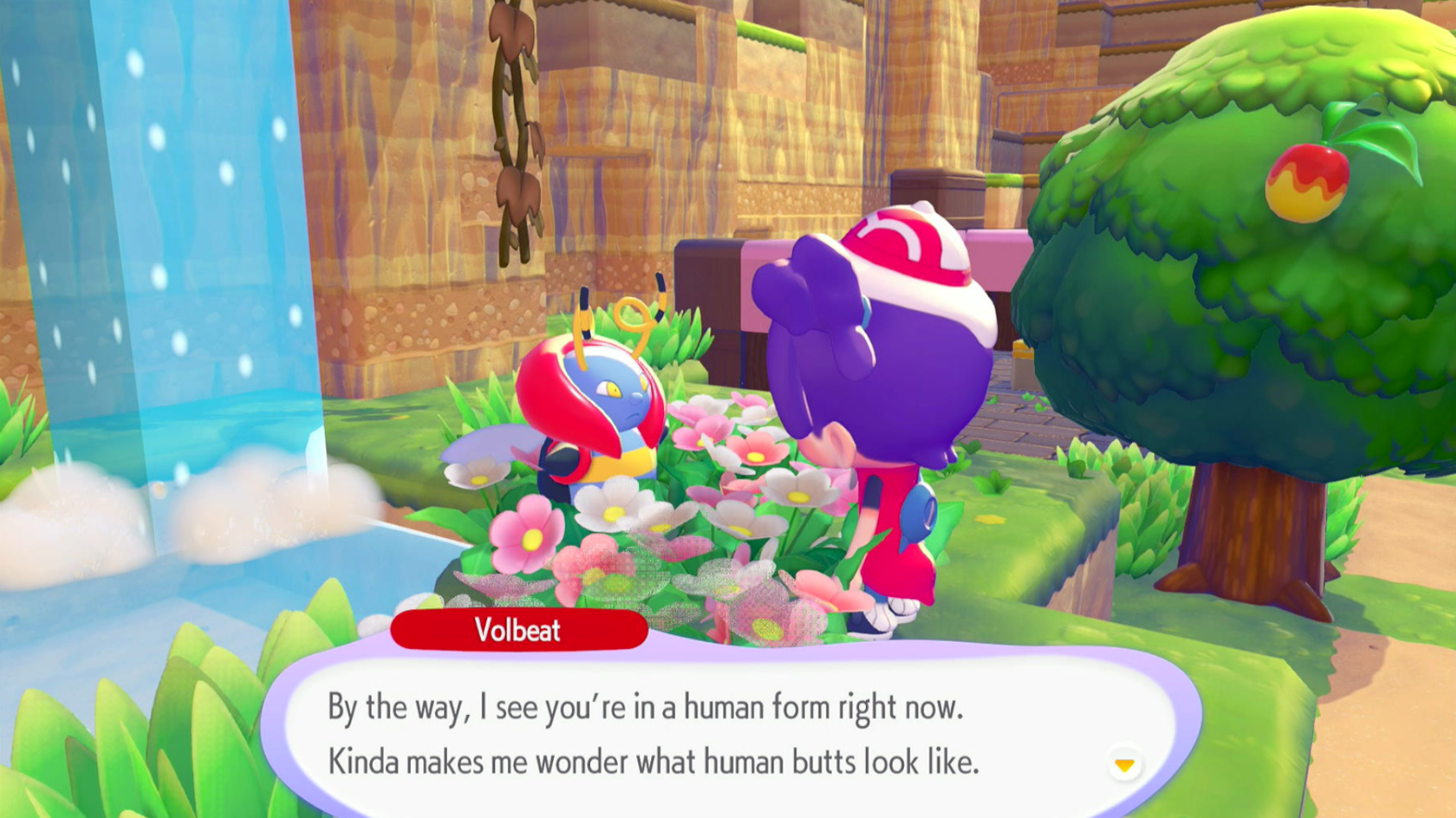
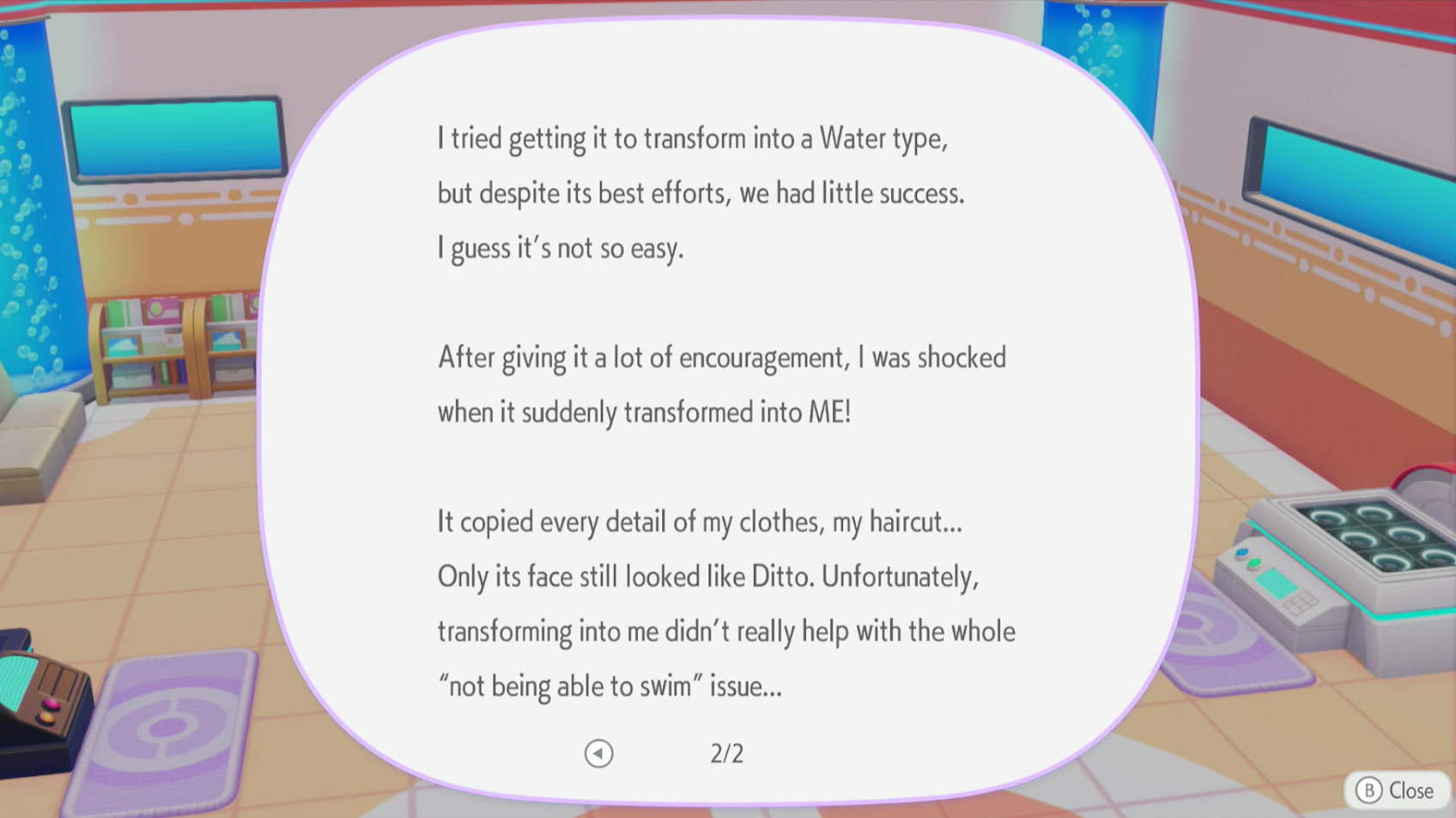
But what's easily among my favorite of the tiny details that most might not even notice is the way Ditto talks to people in the little dialogue options you get. Namely in that Ditto will very often imitate the speech quirks or mannerisms of whoever they're talking to. Which is such a stroke of genius for interpreting how a talking Ditto would, well, talk.
-------------------------------------------------------
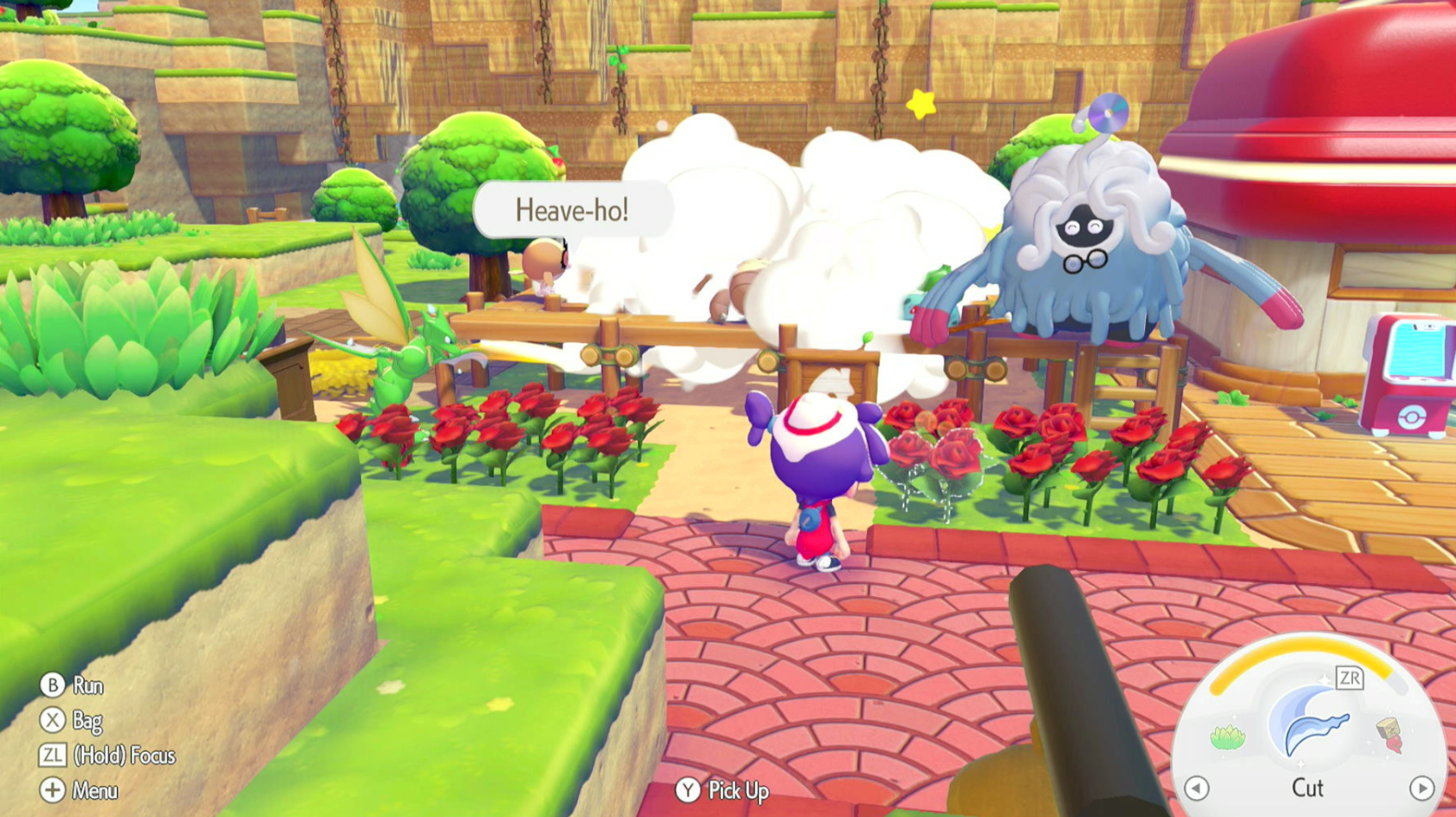
The way this game allows its story to unfold is almost Metroid Prime-esque. There being a main, present-day plot, but on top of that, you'll find text logs and journals lying around the place, eluding to the distant past. The game's intro sequence could maybe even take someone off guard a bit, feeling a little nonsequitur when a Tangrowth mentions they haven't seen people or Pokemon in a long time. Presenting the Pokemon world not with a lush natural vista, but with a dead and dried-up withered wasteland.
Restoring each area to look even just a little more alive can be a little of an undertaking, starting you out from its lowest point and only having improvements to be made. Pokemon will quickly pour in at first, beginning to populate even just a handful of habitats. Many of the first-first Pokemon you meet teaching you your core abilities.
As you begin to poke around and explore your surroundings, it won't be long before you find aforementioned journals and articles discussing the surrounding area and what happened here. Eluding to some climate disaster that threatened to make the environment less livable for both people and Pokemon alike. Pretty plainly putting it into outright text that this is a post-apocalyptic world. Which almost feels wild to see simply based on how safe and saccharine Pokemon has gotten over the years with its setting. Still having plenty of mirrors to real-life ecological problems, but usually in the form of some Pokemon being monsters that embody a type of pollution, and less talking about the literal environmental collapse of our planet that we're starting to see the early stages of.
It might even be at this point that you start to notice something about the layout of the first major area. That being, it has a house, albeit ruined, next to a Pokemon center. A route that goes south and leads to the ocean, a giant hill behind those two buildings, and another route directly to the east that leads out of town. Purple buildings. A road tile that might look familiar if you've played the Let's Go games. It becoming pretty clear that what you spend the opening hours of the game exploring is the ruins of what was once Fuchsia City.
 CELESTE:
Normally, the proverbial "nostalgia bait" isn't something we're ever all that convinced by. But in this case, it does seem pretty clear that the backdrop of a post-apocalyptic Kanto is something the game uses to get its themes across instead of just shallow nostalgia pandering. In that over-urbanization and its related effects has ruined a lot of what 30 or 40-somethings found fun about being outdoors. A little less relatedly in how places aren't as walkable as they used to be, which is saying something, but an unstable climate with harsher rainstorms, droughts, and snows than ever before hasn't made the act of playing outside impossible, but certainly a little less enjoyable for the children of today. Thus leaving a lot of these public play-spaces to simply erode over time thanks to nobody bothering to upkeep them.
-------------------------------------------------------
 LUNA:
LUNA:
Or perhaps simply, it can be used as a bridge for that older generation that still enjoys Pokemon to this day. Going back to what was once comfortable and safe to revisit it. Which in itself is a neutral action, sometimes even necessary to keep your own mental health from derailing, these days. But the fact that this is a familiar world now ruined is an unfortunately inescapable reality. As if to say, nostalgia and play is nice and all, but you're going to have to face reality eventually.
-------------------------------------------------------
 CHIAKI:
Of course, not too long ago, I had my own piece about how these themes of Pokopia are a whole lot more important than anything that could be described as "lore implications". It's transformative with Kanto as a setting with a very specific theme in mind. Fairly obviously set far enough in the future that none of this is going to matter in any main series game. But nonetheless, I do think what's more worth it to look at is how it uses this specific setting as an opportunity for a storytelling medium, rather than a list of things to add to Bulbapedia pages.
-------------------------------------------------------
It's a direction that would almost feel out of place in a Pokemon game, which despite their commentary on pollution or environmental destruction, have always still managed to come out the other end more optimistic than not. Perhaps even naively clinging to the idea that reversing the damage done is as simple as people coming to their senses and putting aside their differences to work together for the betterment of society and the environment. Which, unfortunately things aren't that easy in a world where people in power are, in fact, very apathetic to the amount of destruction their grabs for power cause, even as it takes human lives.
Pokopia itself feels like an acknowledgement that, unfortunately, climate disaster is already here and it's already rendering parts of this earth uninhabitable. Lest we see how much of Florida is underwater in a decade or two. While the game can manage to keep an upbeat attitude most of the time, it still occasionally begs for some pensive introspection, as you see all these familiar locales and landmarks from your childhood look to be in such a miserable state of disrepair.
But that doesn't mean there still isn't some light at the end of the tunnel. And it's why I think, ultimately, that the title is about what to do when you're inheriting a world that the generations before you have left in about as worse a state as they could possibly leave it in. It sucks that it happened, but unfortunately, that's simply the reality, and all you really can do is pick up the pieces and make the world better in a way you'd like to see it. Granted passing in a way that's still very much escapist fantasy, but this is ultimately a game for children, and I think it's important that a game especially under the umbrella of the biggest multi-media franchise on the planet, is able to treat kids with emotional maturity like this. Especially for a time like the present day where that emotional maturity is very often being undermined, even in media that's allegedly for adults.
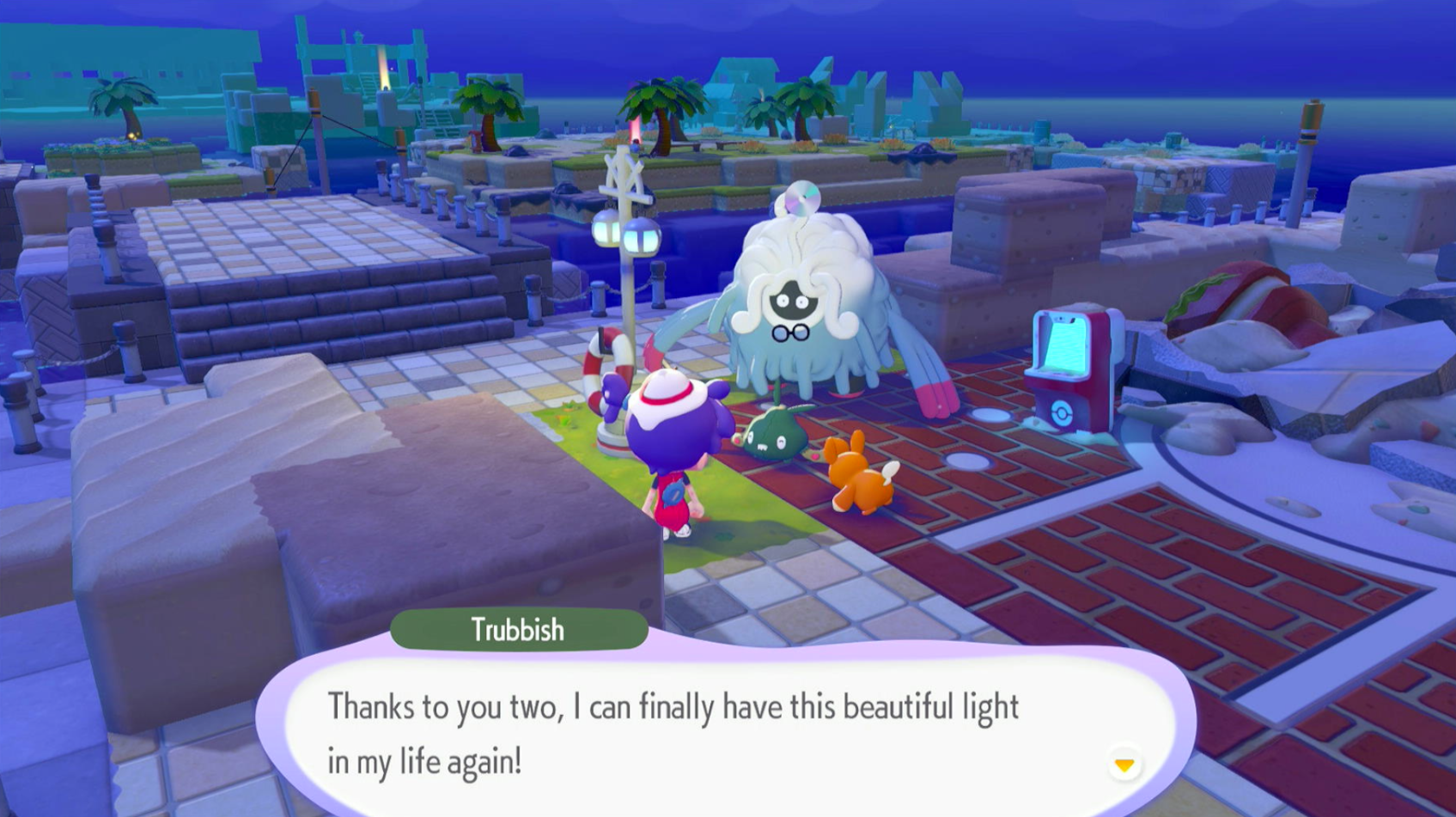
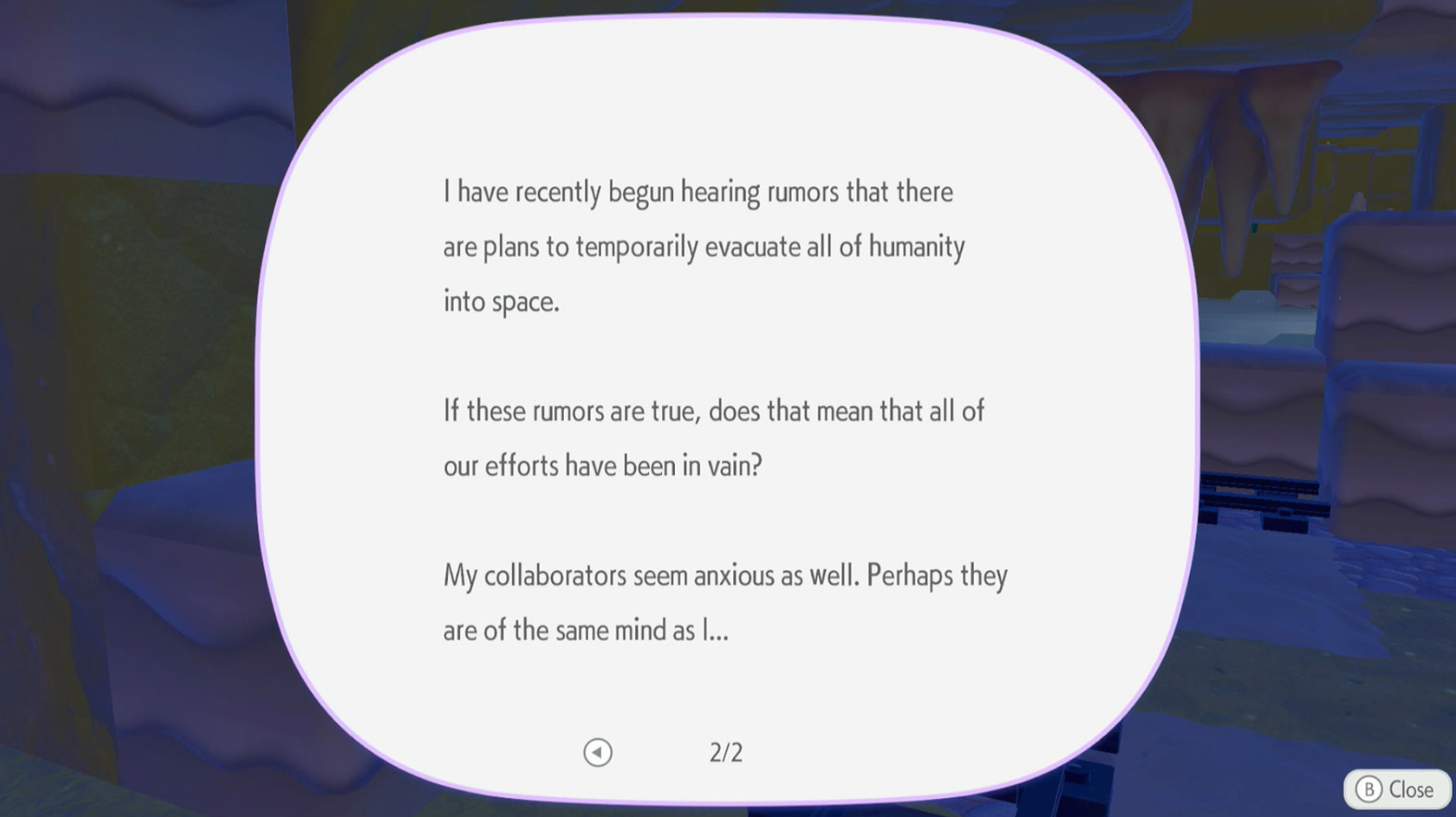
It almost is in itself an admission that escapism can only ever be a band-aid to real, tangible problems, with how often it will take a more melancholic turn, especially as you find the journal logs of your own former trainer, as well as all the logs that discuss where the heck all the humans went. The plan to ensure mutual human and Pokemon survival being to store as many Pokemon onto the digital box system, while all the humans evacuate into space. This plan going awry went it turned out the humans didn't have enough fuel to keep making smaller return trips in order to maintain the box system, leaving humans to only be able to drift further and further away from home as a potentially failing box system could wipe out all remaining life on the planet, trapping all Pokemon in a broken computer, essentially.
You might not thing twice about the way Pokemon will just spontaneously appear next to their habitats with little rhyme or reason, it just being a gameplay abstraction. And it definitely is that, but I certainly can't say I expected the reveal that an unnamed hacker that assisted with the development of this emergency box system, foresaw a future where humans wouldn't be able to make it back to PokeEarth, so they secretly altered the box system so that it'll eject a Pokemon into the environment if it detects even the smallest habitat that it finds suitable for that Pokemon, actually giving an explanation behind every Pokemon just seemingly appearing out of thin air.
In fact, one could assume that this was how Ditto themselves was released, the box system detecting something that could pass as a habitat for it, which led to a wild chain-reaction where every Pokemon is being released. I suppose convenient that every Pokemon also seems to be amnesiac on top of this, not recalling anything about a previous trainer or the like. Although Ditto seems to get protagonist privileges there, the game stating at the beginning that they do indeed remember their trainer.
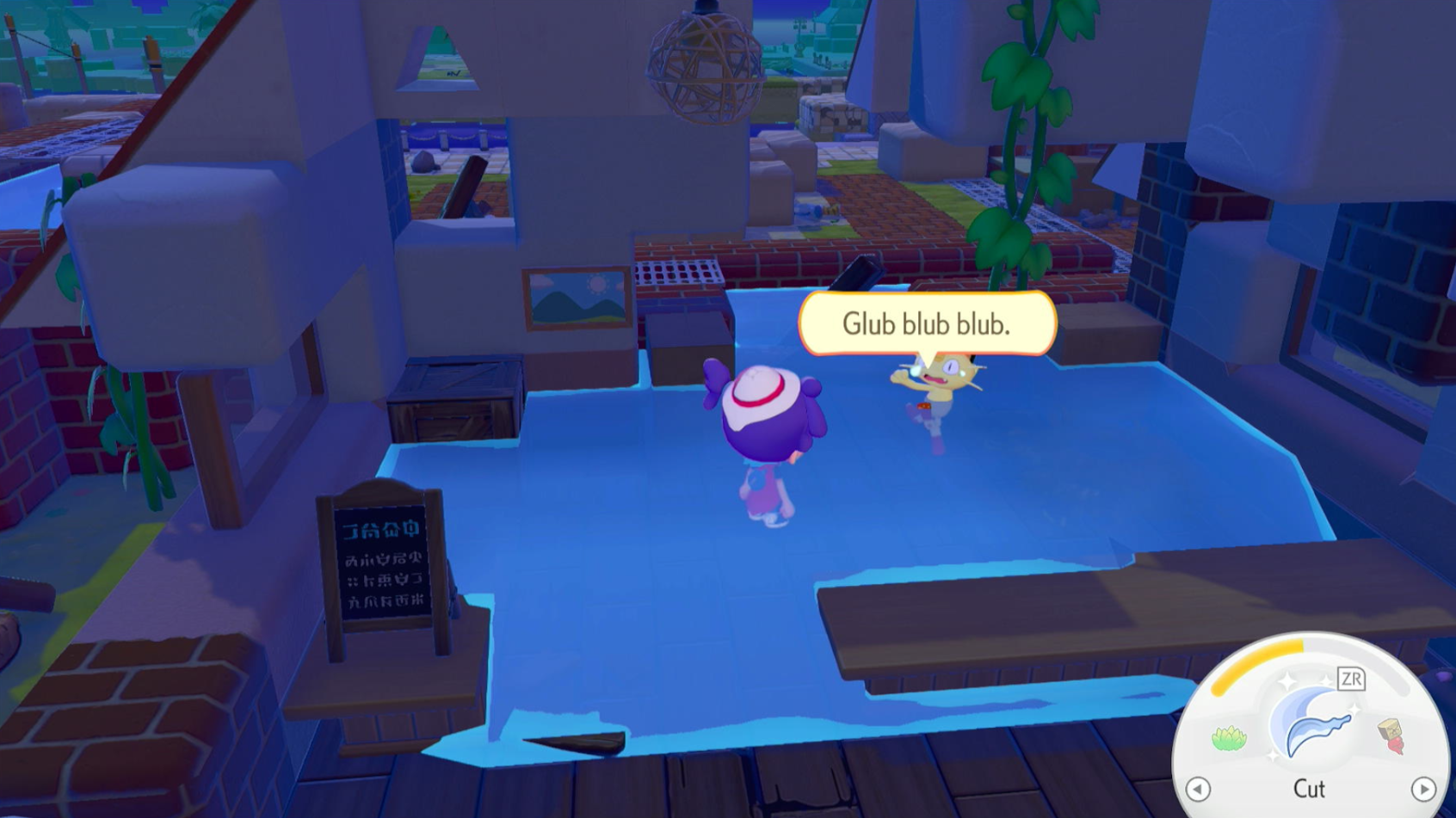
The more active part of the story that you see unfold rather than piece together the remnants of, is notably a bit cutesier, but still managing to hold onto some of that edge. One Pokemon that managed to escape digital purgatory was a professor's Tangela. Which is pretty easy to put two and two together there and see that Professor Tangrowth, the very first Pokemon you meet, is, in fact, this Tangela. The story, unfortunately, doesn't really get into how Professor Tangrowth feels about having survived Pokepocalypse. Not that they have to be visibly sad, but their recollection about humanity, only ever manifests in a fascination with human-made objects. This being a unique gameplay quirk of theirs, being able to appraise different objects you find buried in the ground.
It is at least on the surface, heartwarming to bring this visibly aged Pokemon a much more happy place to live, and indeed surround them with fellow Pokemon to be friends with, but it feels like something that would've hit a little harder if Tangrowth had anything to say about knowing how the world used to look only to see it wilt and die. In fact, it is rather annoying that the game does give them a moment to reminisce about past events, only for the game to pull the old "fade to black because the old man is so boring you fell asleep" joke when I actually kind of would have liked to have that be a moment for them.
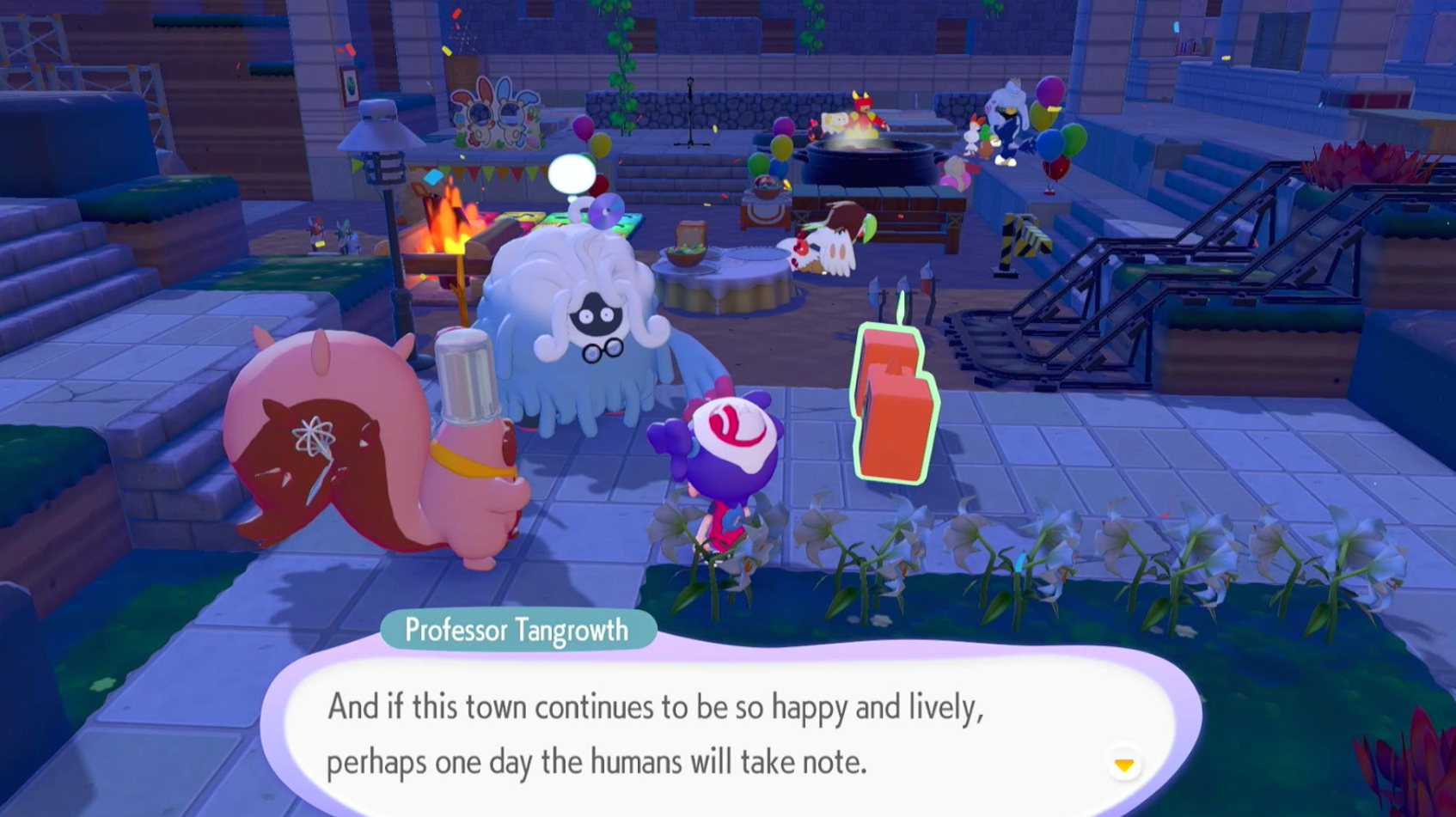
It is nice that each area, while definitely having a few repeating trends, each have a unique part of their story arch that makes them interesting. Each one also climaxing with the meeting of a legendary Pokemon who then does something to help you out. The subplot we had the most fun with easily being the cooking and partying subplot, where it gets you to find various party objects to put in an area, allowing you to get creative with what you put down, us not really being able to resist and using nearby mine track pieces to make, what is essentially, a county fair roller coaster.
CELESTE:
It's part of why Rocky Ridges is probably my favorite area of the game. The alpine setting, as well as it doubling as both a representation of Pewter City and Mt. Moon at the same time. The area seems a little more cramped than Withered Wasteland at first, but it really starts to open up, both as you clear out all the volcanic ash covering the land and begin travelling around the mine shafts that are hiding all kinds of secrets. Chief among them being the entirety of the Pewter Museum, just chilling in a crater in a volcano somewhere.
-------------------------------------------------------
 VIXI:
VIXI:
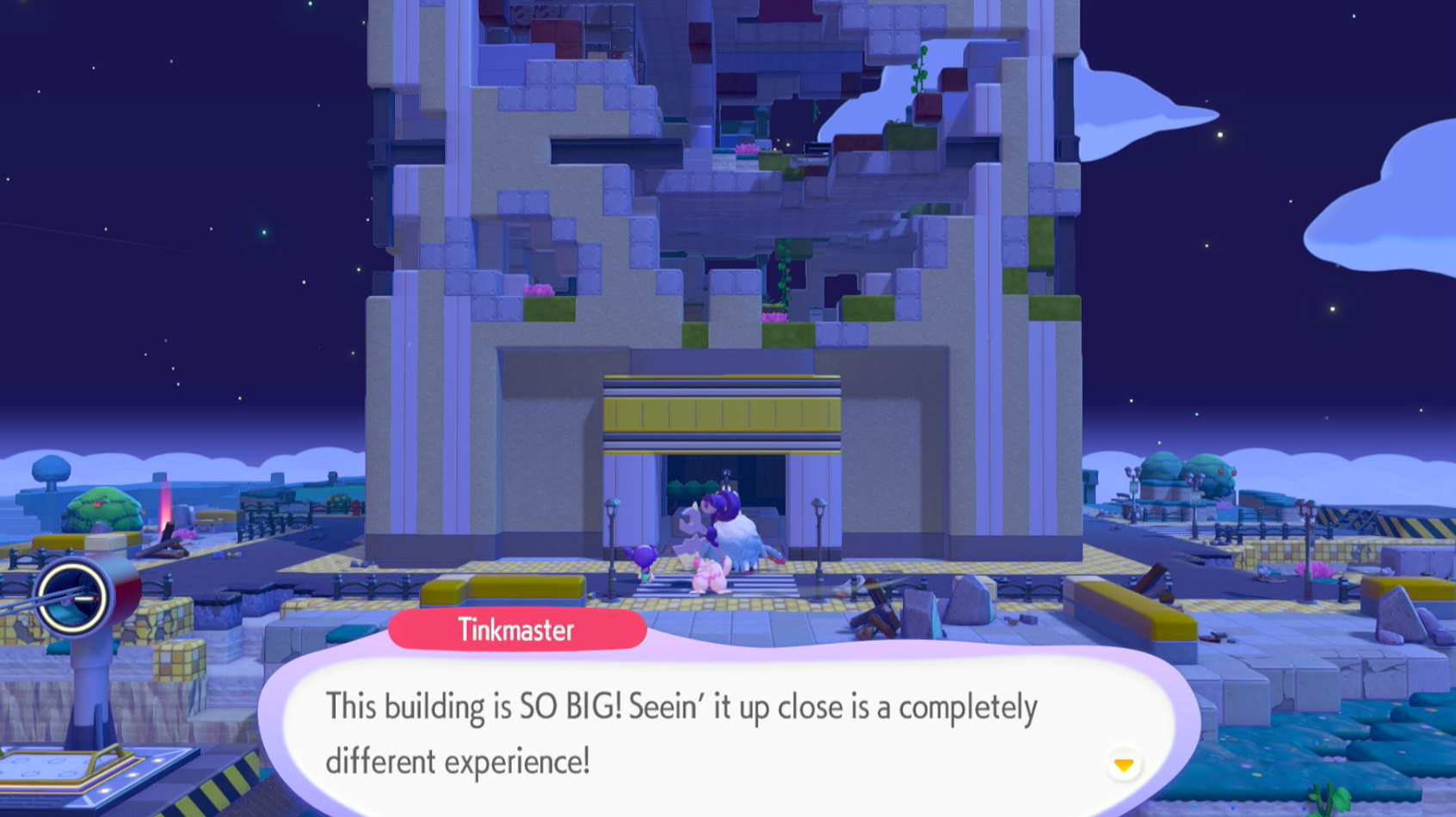
Though I do think the game sadly has its final area in the form of the Sparkling Skylands kind of end on a bit of a nothingburger of a story. Conceptually, it's the coolest area of the game, being Saffron City, but torn into various sky-islands thanks to tectonic activity and some mysterious crystals keeping the islands afloat. But sadly, the story just involves finding an expert engineer in a Tinkaton character, who will then simply rebuild the floors of the Sylph Co. building. Which only really involves gathering the resources and the right Pokemon for the job before just sending them to do their work and waiting on it to be done. Something I felt like the other main quests were good at avoiding making me do. Not that there's ever really a shortage of things to do in this game, but it did feel like I spent a good portion of the Skylands quest not even being inside Skylands.
-------------------------------------------------------
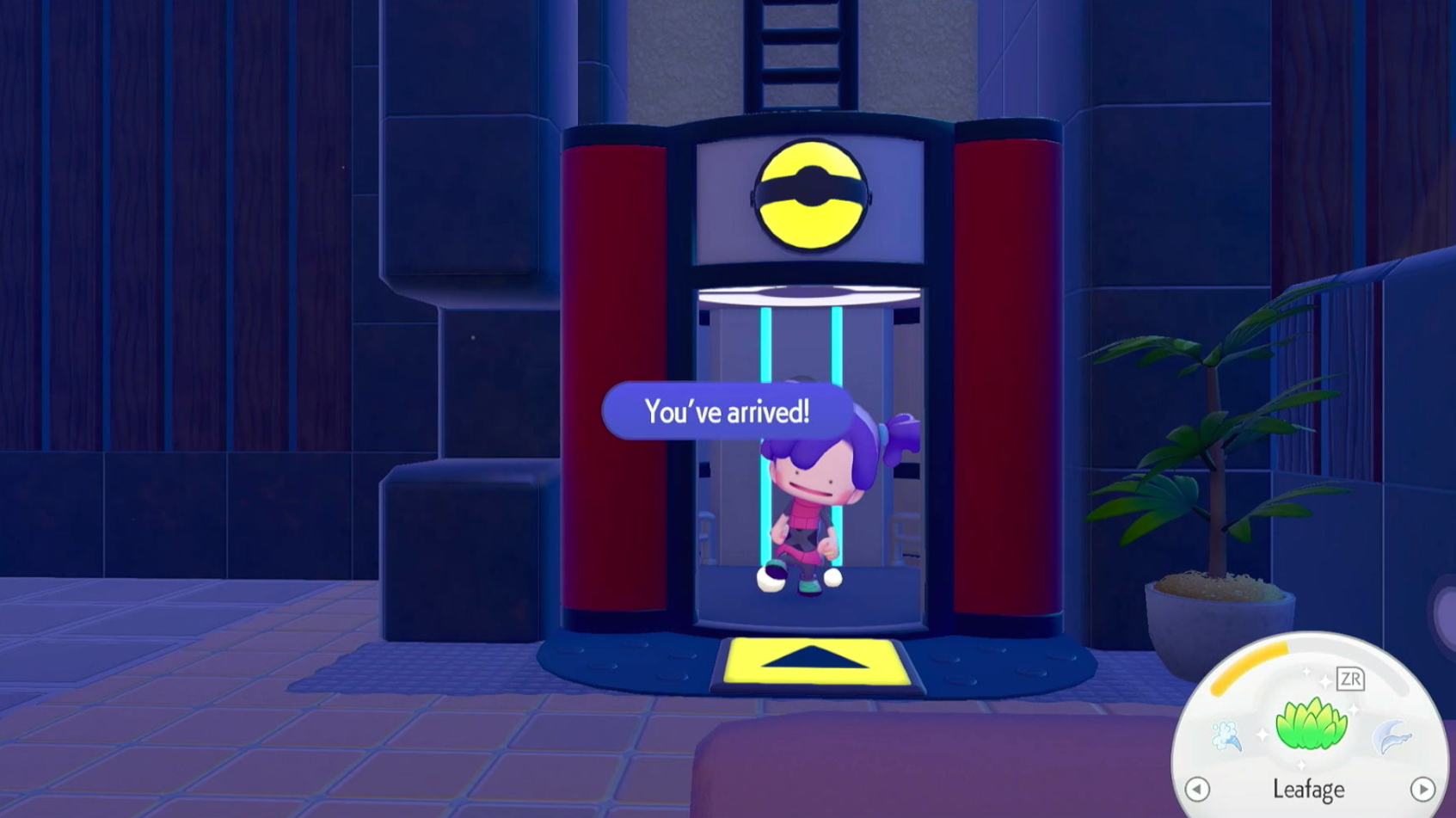
The story itself caps off with the lighthouse-like building you find back in Fuchsia City, having eight tiers of tasks to complete, all of which just so happening to require something you've learned or item that can only be acquired from the various areas in the game. And it's only at this point that you finally see a staff roll, where the building turns out to be a rocket, which manages to travel through the reaches of space, and just so very conveniently comes across who is implied to be your original trainer. I guess nevermind the logistics of both how long it's surely been between the apocalypse of PokeEarth and how long it must take for the rocket to have reached this location, but it's clearly a moment that exists for the heartstrings-tugging, so I suppose I'll forgive it.
Naturally, though, the rolling of credits far from means the end of a game like this. And definitely from here, the game has no more to teach you as you take everything you've learned into doing whatever it is you'd like, really. Whether it's raising environment levels for each area or performing the usual task of filling out the Pokedex.
One thing you can do is visit the fifth area, a nameable zone that could almost be described as a place where the rest of the game was acting as a tutorial for, in that it's a gigantic, relatively flat set of islands that you're very much free to do with as you see fit, the game even going so far as to state that there's no actual story content here. Though I must admit, this is definitely a point where the game loses me a bit, just given the time commitment to make anything all that interesting-looking. Simply put, I got other games to play.
But I can definitely see myself coming back to Pokopia every now and then to hack away at it. Especially since, unlike Animal Crossing, I can take a long break from the game without feeling like I'm going to be guilt tripped for being busy with other things and with a huge mess to clean up. Pokopia definitely lends itself to that type of play, so it's nice that it plays to both the die-hards that'll want to get their fill now, or people like me that'll be more about sprucing the world up on occasion rather than have it be a project with priority.
Normally, I don't like to include the discussion of DLC in on a game, but I also can't help but get the feeling that it's kind of inevitable. The game came pre-loaded with a spring and Aprils Fools event, but with nothing else in it, so I can see DLC that line up with real world events getting patched in over time. Seemingly also adding in a few new Pokemon and items at a time, given the spring event brought the Hoppip line with it. And with the game being divided into areas that don't share a space, it could be quite easy to include a larger expansion into the game. Which in this case, I honestly wouldn't even mind, given Pokopia already feels so feature-complete as-is. This definitely doesn't feel like a game that got released to make its money early, and then get finished via bits-and-pieces free updates later, with plenty to do, a lot of huge worlds to explore, and quite a lot of Pokemon and items to collect.
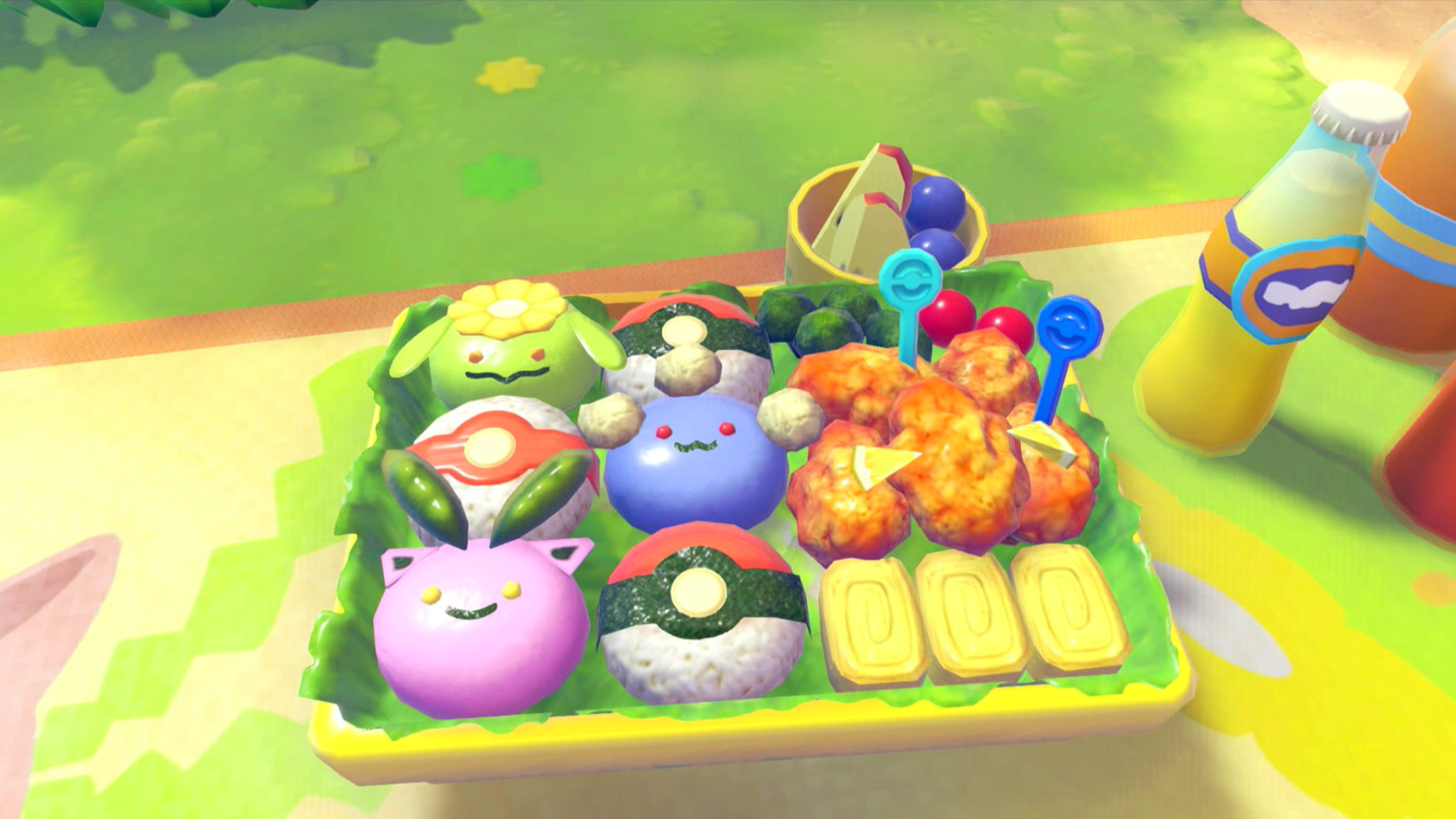
I can't help but feel like describing a game as "special" might come off to others as a bit hyperbolic. Especially a game with such an innocuous exterior as Pokopia. But for the longest time, I had always thought of the Pokemon Snap and Mystery Dungeon games as the best Pokemon spinoffs. And while I don't have it in me to pose this game as "better" than either of those two, simply because its goals are way different to either of those games. I can at the very least say that it stands among them as a trinity of the franchise's stand-out spinoff titles.
It's not just cutesy for being cutesy's sake, it's an important part of Pokopia's identity of course, but it's also willing to touch on a much more serious subject matter, in a way that's different from its Mystery Dungeon contemporary. Where Mystery Dungeon is about the epic, larger-than-life adventure, Pokopia is more about the darker undertones that reflect what's going on in real life. Almost in a way that's a little closer to the series' core values in acting as a vehicle in conveying an environmentalist message to children.
And while I don't want to get my hopes up, I want to believe that Pokopia isn't just going to be an exception and that no other decent spinoff is going to be coming for another decade or so. Hoping that the game's success and high praises tells the powers that be among the Pokemon brand that people do want deeper and more intricate experiences with this franchise. And I don't mean that in a way that necessarily just means "I sure hope this gets a sequel some day." I would just adore if Pokopia was that first breath of fresh air and not the last, dying gasp for Pokemon spinoffs.
-------------------------------------------------------
 VIXI SCORE: 9.5/10
Absolutely adorable delight of a game. Will probably come back to it every no and then between or during the downtime of other games. In fact, I haven't touched Pokopia for a couple weeks at this point already, I wonder how our towns are doing-
 LUNA SCORE: 10/10
Absolutely in love with the game, it always finding charm to squeeze out of itself at near every opportunity it can. And it's just plain lovely to play a Pokemon game that doesn't really have a single asterisk you have to put beside a compliment.
 JINX SCORE: 7/10
this kind of game is not my speed, personally. but i do feel like it's about the best a game like this gets, at least as far as i've gotten to play. my main critique would be that the last world does kind of wane the interest, so it's a disappointing note to end on.
 IONO SCORE: 9/10
Goodra's in it so it's got my backing. But seriously, it's such a fun game to play, and a truly rare case of a life sim game that barely has any point where I'd ever call it boring! Super cool!
 CELESTE SCORE: 10/10
Some mild control fiddle aside, this game is. Calling it a blast would be an odd thing for a game like this. But it IS very charming and feels very lovingly crafted to a point where I can hardly bring myself to find any real complaints. Simply adorable!
 CHIAKI SCORE: 9.5/10
This definitely feels like THE creative sandbox game for people that want to enjoy creative sandbox games but don't have a ton of spare time to commit to anything crazy. Or at the very least don't want to dedicate all their spare time to just the one game. It respects your time, is always introducing new mechanics to play with all the way to the very end. It's a hard game to not love.
OVERALL SCORE: 55/60